Many patients who visit my clinic tell me:
“Doctor saab, I was not sure whether I should see a chest specialist or not.”
And honestly, that’s understandable.
Most people know when to visit a dentist for a tooth problem.
Most people know when to visit an eye specialist for vision issues.
But when it comes to breathing, coughing, allergies, or chest problems, people often keep delaying their visit.
They think:
“It is just a cough.”
“Maybe the weather changed.”
“Maybe it is pollution.”
“Maybe it will get better on its own.”
Sometimes it does.
But sometimes your body is trying to tell you something more important.
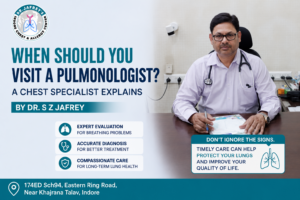
Let’s understand when you should consider seeing a pulmonologist.
First, What Does a Pulmonologist Actually Treat?
Many people think a pulmonologist only treats serious lung diseases.
That is not true.
A pulmonologist treats conditions related to:
- Lungs
- Airways
- Breathing problems
- Chest infections
- Allergies affecting breathing
- Asthma
- COPD
- Chronic cough
- Sleep-related breathing disorders
In simple words, if your symptoms involve breathing, chest discomfort, persistent cough, wheezing, or recurrent respiratory problems, a pulmonologist may be the right specialist to consult.
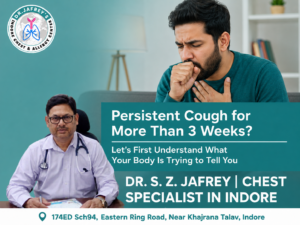
When Your Cough Refuses to Go Away
This is probably the most common reason patients come to me.
Now we need to understand something.
A cough itself is not a disease.
It is a symptom.
Your body produces cough for a reason.
If your cough has continued for:
- More than 3 weeks
- Keeps returning repeatedly
- Disturbs your sleep
- Produces excessive phlegm
- Does not improve despite medicines
Then it is time to investigate the cause rather than simply suppressing the symptom.
When You Feel Breathless While Doing Normal Activities
Many patients slowly adapt to breathlessness without realizing it.
They tell themselves:
“Maybe I am getting older.”
“Maybe I am out of shape.”
“Maybe I gained some weight.”
But if you notice:
- Breathlessness while climbing stairs
- Difficulty walking short distances
- Feeling unable to take a deep breath
- Reduced exercise capacity
You should not ignore it.
Breathlessness is your body’s way of telling you that something may need evaluation.
If You Frequently Experience Wheezing
Some people describe wheezing as:
- A whistling sound
- A musical sound while breathing
- Tightness in the chest
Wheezing is commonly associated with:
- Asthma
- Allergic airway disease
- Chronic lung conditions
If wheezing happens repeatedly, especially during weather changes, dust exposure, exercise, or at night, a pulmonology consultation can help identify the cause.
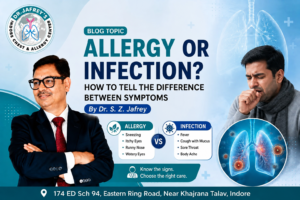
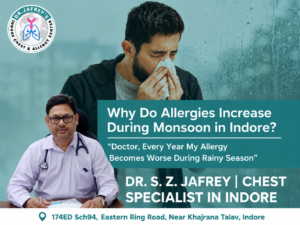
When Your Allergies Keep Coming Back
This is where many people get confused.
People often think allergy means only sneezing.
But allergy is a very vast subject.
Allergies can affect:
- Nose
- Eyes
- Skin
- Sinuses
- Lungs
Some patients mainly complain of:
- Persistent cough
- Breathing difficulty
- Recurrent throat irritation
- Repeated chest congestion
In such situations, the underlying issue may be allergy-related inflammation affecting the airways.
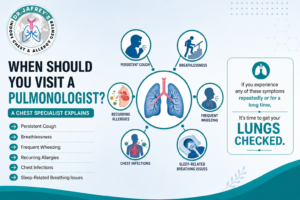
If You Keep Getting Chest Infections
Getting one infection occasionally is common.
But repeated infections deserve attention.
If you find yourself needing antibiotics multiple times every year because of:
- Chest infections
- Bronchitis
- Persistent mucus
- Recurrent fever with cough
It may be worth identifying why these infections keep returning.
When You Are a Smoker or Former Smoker
Many smoking-related lung conditions develop gradually.
Patients often don’t notice symptoms until significant damage has already occurred.
If you currently smoke or have smoked in the past and experience:
- Chronic cough
- Breathlessness
- Excessive phlegm
- Reduced stamina
A lung evaluation may be beneficial.
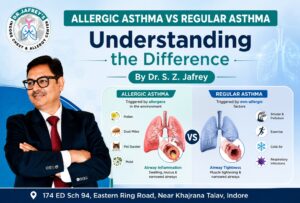
If You Have Asthma But Symptoms Are Not Well Controlled
Many asthma patients believe occasional symptoms are normal.
They continue experiencing:
- Night-time cough
- Breathlessness
- Wheezing
- Repeated inhaler use
without realizing their asthma may not be adequately controlled.
The goal of asthma treatment is not simply surviving symptoms.
The goal is living comfortably without them interfering with daily life.
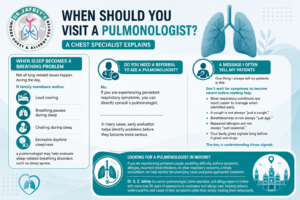
When Sleep Becomes a Breathing Problem
Not all lung-related issues happen during the day.
If family members notice:
- Loud snoring
- Breathing pauses during sleep
- Choking during sleep
- Excessive daytime sleepiness
a pulmonologist may help evaluate sleep-related breathing disorders such as sleep apnea.
Do You Need a Referral to See a Pulmonologist?
No.
If you are experiencing persistent respiratory symptoms, you can directly consult a pulmonologist.
In many cases, early evaluation helps identify problems before they become more serious.
A Message I Often Tell My Patients
One thing I always tell my patients is this:
Don’t wait for symptoms to become severe before seeking help.
Most respiratory conditions are much easier to manage when identified early.
A cough is not always “just a cough.”
Breathlessness is not always “just age.”
Repeated allergies are not always “just seasonal.”
Your body gives signals long before it gives warnings.
The key is understanding those signals.
Looking for a Pulmonologist in Indore?
If you are experiencing persistent cough, breathing difficulty, asthma symptoms, allergies, recurrent chest infections, or other respiratory concerns, a timely consultation can help identify the underlying cause and guide appropriate treatment.
Dr. S. Z. Jafrey is a senior pulmonologist, chest specialist, and allergy expert in Indore with more than 30 years of experience in respiratory and allergy care, helping patients understand the root cause of their symptoms rather than simply treating them temporarily.