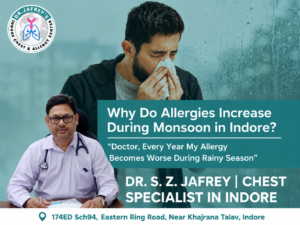
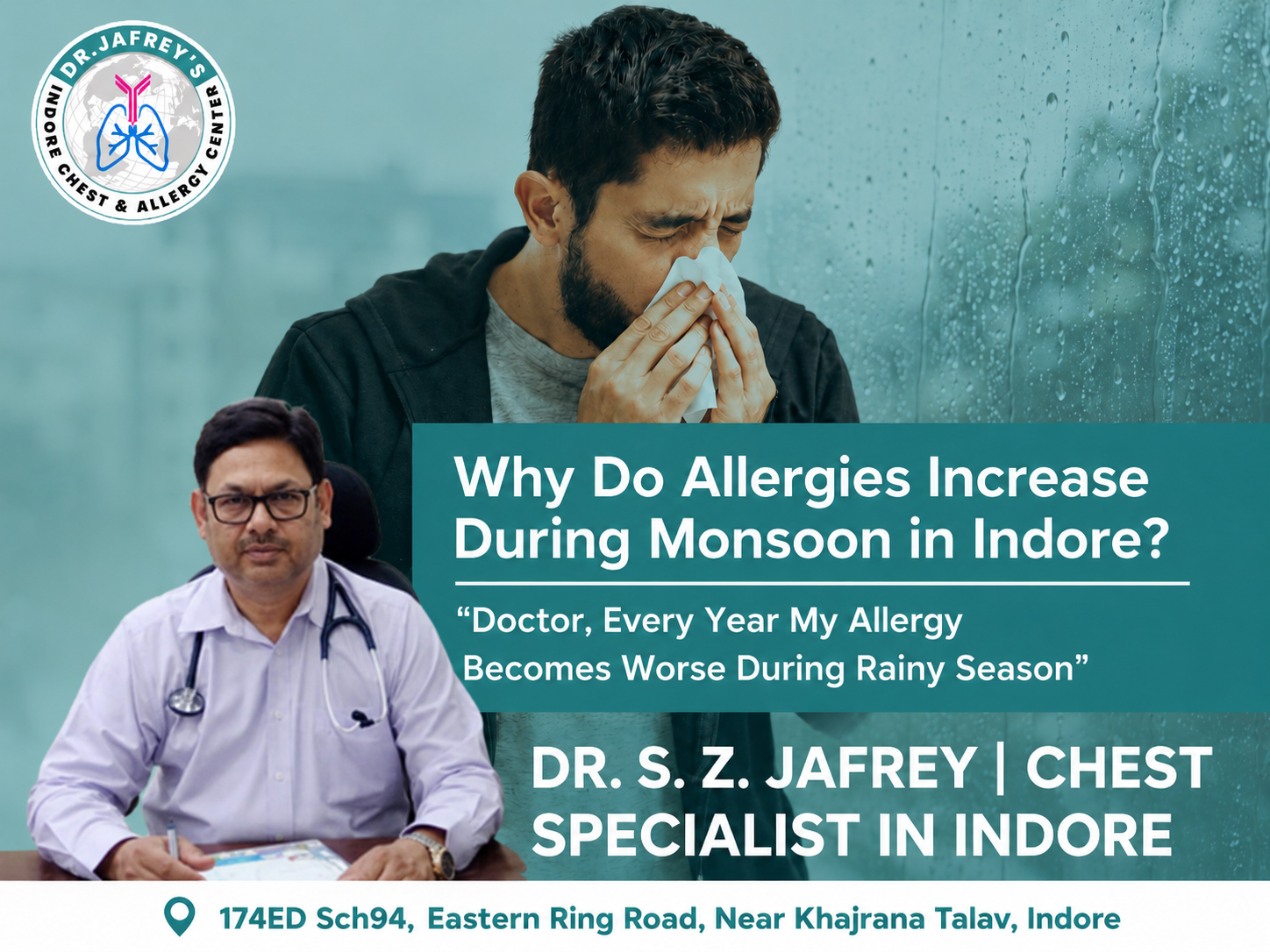
“Doctor, Every Year My Allergy Becomes Worse During Rainy Season”
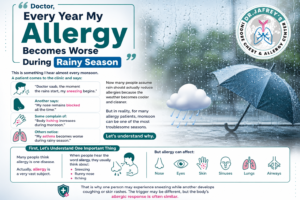
This is something I hear almost every monsoon.
A patient comes to the clinic and says:
“Doctor saab, the moment the rains start, my sneezing begins.”
Another says:
“My nose remains blocked all the time.”
Some complain of:
“Body itching increases during monsoon.”
Others notice:
“My asthma becomes worse during rainy season.”
Now many people assume rain should actually reduce allergies because the weather becomes cooler and cleaner.
But in reality, for many allergy patients, monsoon can be one of the most troublesome seasons.
Let’s understand why.
First, Let’s Understand One Important Thing
Many people think allergy is one disease.
Actually, allergy is a very vast subject.
When people hear the word allergy, they usually think about:
- Sneezing
- Runny nose
- Itching
But allergy can affect:
- Nose
- Eyes
- Skin
- Sinuses
- Lungs
- Airways
That is why one person may experience sneezing while another develops coughing or skin rashes.
The trigger may be different, but the body’s allergic response is often similar.
Why Does Monsoon Trigger More Allergies?
Increased Moisture Creates a Perfect Environment
Monsoon brings humidity.
Humidity means moisture.
And moisture encourages the growth of:
- Mold
- Fungi
- Dust mites
These are among the most common allergy triggers.
Many patients focus only on outdoor pollution.
But during monsoon, indoor allergens often become a bigger problem.
The bedroom.
The mattress.
The pillow.
The curtains.
The carpet.
All of these can become reservoirs for allergy-causing particles.
Dust Mites Love Monsoon Weather
Now this is something many people are unaware of.
Dust mites are microscopic organisms.
You cannot see them.
You cannot feel them.
But they are one of the most common causes of allergic rhinitis and allergic asthma.
And what do dust mites love?
Warmth and humidity.
Exactly what monsoon provides.
As their numbers increase, allergy symptoms often become more noticeable.
Why Does Sneezing Become Worse During Monsoon?
Patients often ask:
“Doctor, why am I sneezing continuously in rainy season?”
In many cases, the reason is allergic rhinitis.
The lining of the nose becomes sensitive and inflamed.
This may cause:
- Repeated sneezing
- Runny nose
- Nasal blockage
- Post-nasal drip
- Itchy nose
Many people mistake this for a common cold.
But when symptoms continue for weeks or months, allergy becomes a strong possibility.
Why Does Asthma Often Flare Up During Rainy Season?
Let’s understand something important.
Not every asthma attack is caused by infection.
Sometimes the trigger is allergy.
Sometimes humidity.
Sometimes fungal spores in the air.
Sometimes sudden weather changes.
Patients may notice:
- Increased coughing
- Chest tightness
- Wheezing
- Breathlessness
Especially at night or early morning.
This is why monsoon requires extra attention for people already diagnosed with asthma.
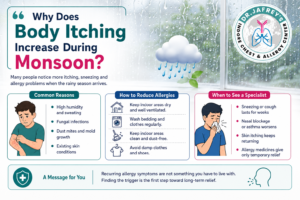
Why Does Body Itching Increase During Monsoon?
Another common complaint is:
“Doctor, my skin starts itching whenever the rainy season arrives.”
Several factors can contribute:
- Increased sweating
- Fungal infections
- Existing eczema
- Allergic skin conditions
- Urticaria (hives)
Many people repeatedly apply creams without identifying the actual trigger.
The skin improves temporarily and then the symptoms return.
Understanding the underlying cause is often more important than simply treating the itching.
Does Rain Itself Cause Allergy?
This is a common misconception.
The rain itself is usually not the allergy.
Just like pollution itself does not always directly create allergy.
What often happens is that environmental conditions change.
Humidity rises.
Mold grows.
Dust mites multiply.
Airborne particles behave differently.
These factors can aggravate existing allergic tendencies.
That is why some people notice symptoms only during particular seasons.
How Can You Reduce Monsoon Allergies?
Some simple precautions may help:
Keep Indoor Areas Dry
Moist environments encourage mold growth.
Good ventilation can help.
Wash Bedding Regularly
Pillows, bedsheets, and blankets can accumulate allergens.
Avoid Damp Clothing
Wet clothes and shoes can promote fungal growth.
Control Indoor Dust
Regular cleaning becomes even more important during monsoon.
Don’t Ignore Persistent Symptoms
Repeated sneezing, coughing, wheezing, or itching should not be considered normal if they continue for weeks.
When Should You Consult an Allergy Specialist?
Consider evaluation if:
- Sneezing continues for weeks
- Nasal blockage becomes frequent
- Cough worsens every monsoon
- Asthma symptoms increase
- Skin itching keeps returning
- Allergy medicines provide only temporary relief
Many patients spend years treating symptoms without identifying what they are actually allergic to.
Finding the trigger is often the first step toward long-term control.
A Message I Often Tell My Patients
Every monsoon, people tell me:
“Doctor saab, this happens every year.”
And my response is usually:
“If it happens every year, then it deserves proper evaluation.”
Recurring allergy symptoms are not something you simply have to live with.
The goal is not just temporary relief.
The goal is understanding why your body is reacting in the first place.
Once the trigger is identified, management becomes much more effective.
About Dr. S. Z. Jafrey
Dr. S. Z. Jafrey is a senior pulmonologist, allergy specialist, and chest physician in Indore with more than 30 years of experience in allergy diagnosis, respiratory diseases, asthma management, allergic rhinitis, skin allergies, food allergies, and advanced allergy testing.