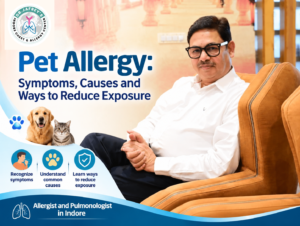
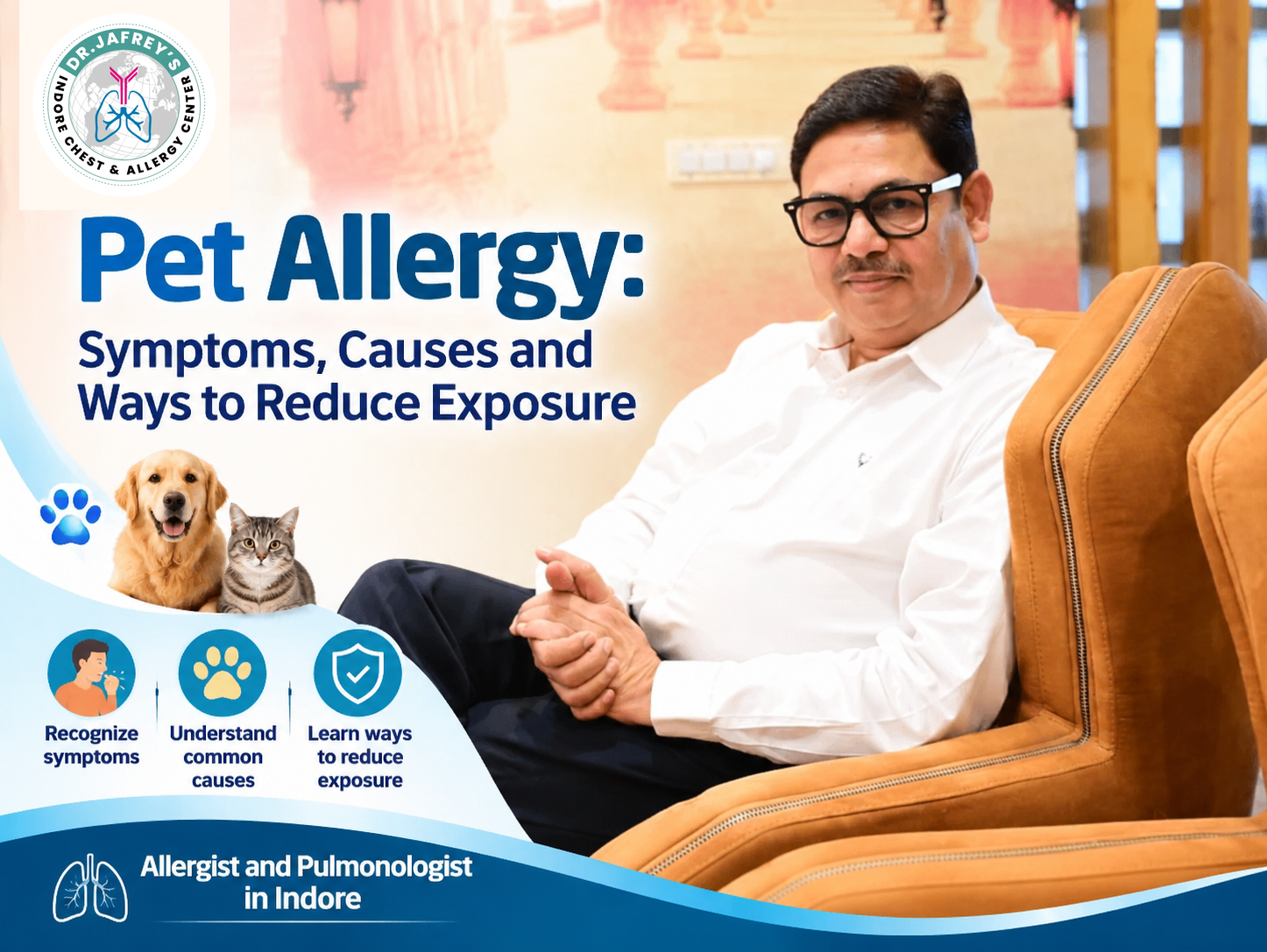
Pet Allergy in Indore is a condition in which the immune system reacts to certain proteins found in an animal’s skin cells, saliva or urine. Cats and dogs are common sources of pet allergens, although other animals can also trigger allergic reactions. Exposure may cause sneezing, a runny nose, itchy eyes, skin irritation or respiratory symptoms in sensitive individuals.
Recognising Pet Allergy Symptoms is important because these reactions can sometimes resemble seasonal allergies, dust allergies or other respiratory conditions. In some individuals, exposure to pet allergens may also worsen asthma symptoms, causing wheezing, chest tightness or difficulty breathing.
Dr. S.Z. Jafrey, Allergist and Pulmonologist at Dr. Jafrey’s Indore Chest & Allergy Centre, evaluates allergy-related and respiratory concerns. People searching for an Allergist in Indore may benefit from medical assessment when symptoms repeatedly occur around pets or persist despite efforts to reduce allergen exposure.
What Is Pet Allergy?
Pet allergy is an allergic reaction that occurs when the immune system identifies certain animal proteins as harmful substances. In response, the body releases chemicals such as histamine, which can cause symptoms affecting the nose, eyes, skin and respiratory system.
Pet allergens are commonly present in tiny skin flakes known as dander, saliva and urine. These particles can settle on furniture, carpets, clothing and bedding. Some allergens remain in indoor environments even after the animal has left the room.
Pet allergy does not necessarily mean that a person is allergic to an animal’s fur itself. Instead, proteins associated with the animal are generally responsible for triggering the reaction.
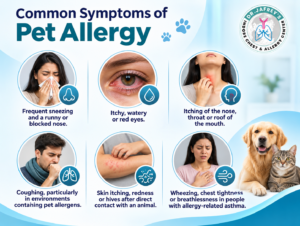
What Are the Common Symptoms of Pet Allergy?
Pet Allergy Symptoms may develop shortly after exposure or become noticeable after spending time in an environment where animal allergens have accumulated.
Common symptoms include:
-
Frequent sneezing and a runny or blocked nose.
-
Itchy, watery or red eyes.
-
Itching of the nose, throat or roof of the mouth.
-
Coughing, particularly in environments containing pet allergens.
-
Skin itching, redness or hives after direct contact with an animal.
-
Wheezing, chest tightness or breathlessness in people with allergy-related asthma.
The severity of symptoms varies between individuals. Some people experience mild nasal irritation, while others may develop significant respiratory symptoms. Persistent or worsening breathing difficulties require medical assessment.
What Causes Pet Allergy?
Pet allergy develops when the immune system reacts to proteins produced by animals. Cats and dogs are common sources, but rabbits, rodents and other animals may also trigger allergic reactions. Several factors can contribute to exposure and symptom development.
Animal dander: Tiny skin flakes can carry allergens and become airborne during routine household activities. Saliva: Animals spread saliva proteins onto their fur when grooming. These proteins may transfer to a person’s skin, clothing or household surfaces.
Urine: Certain proteins in animal urine can act as allergens, particularly with some small household pets. Indoor allergen accumulation: Pet allergens can collect in carpets, mattresses, upholstered furniture and curtains. They may remain present even when the animal is not nearby. A family history of allergic conditions, asthma or allergic rhinitis may increase the likelihood of developing allergies, although pet allergy can affect people without a known family history.
How Is Pet Allergy Diagnosed?
Pet Allergy Diagnosis in Indore generally begins with a review of symptoms, exposure history and previous allergic reactions. A healthcare professional may ask whether symptoms occur after touching an animal, visiting homes with pets or spending time in certain indoor environments. Depending on the clinical findings, the following tests may be recommended:
Skin prick testing: Small amounts of selected allergens are introduced into the surface of the skin. A local reaction may indicate sensitisation to a particular allergen. Specific IgE blood testing: This test measures antibodies against selected animal allergens in the blood.
Clinical assessment: Test results are interpreted alongside the patient’s symptoms and exposure history because a positive allergy test does not always mean that the allergen is causing symptoms. The appropriate investigation depends on the individual’s medical history and suspected allergy triggers.
How Can You Reduce Exposure to Pet Allergens?
Reducing exposure to pet allergens may help control symptoms, although complete avoidance can be difficult because allergens can persist in indoor environments.
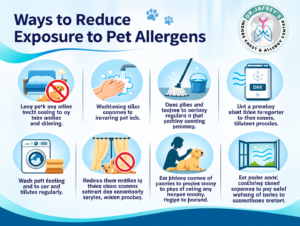
Practical steps include:
-
Keep pets out of the bedroom and away from pillows and bedding.
-
Wash hands after touching or handling animals.
-
Clean floors and household surfaces regularly using suitable cleaning methods.
-
Use a properly sized HEPA air purifier to help reduce airborne particles.
-
Wash pet bedding and household fabrics regularly.
-
Reduce dust-collecting items, such as heavy curtains and unnecessary carpets, where practical.
-
Ask another household member to groom the pet or clean its living area if these activities trigger symptoms.
-
Maintain good ventilation when appropriate and avoid allowing allergens to accumulate indoors.
If symptoms continue despite these measures, a medical professional can help identify additional triggers and discuss suitable treatment options.
What Treatment Is Available for Pet Allergy?
Pet Allergy Treatment in Indore depends on the symptoms, their severity and whether the person also has asthma or another allergic condition. Treatment options may include antihistamines for sneezing and itching, nasal corticosteroid sprays for allergic rhinitis and appropriate eye drops for allergic eye symptoms. Some patients may benefit from other prescribed medicines based on their clinical assessment.
Allergen immunotherapy may be considered for selected patients with confirmed allergies when symptoms remain difficult to control. Its suitability depends on the allergen involved, the patient’s medical history and specialist assessment. People with asthma may require a separate asthma management plan. Prescribed medicines should be used according to medical advice, and patients should not start or stop treatment without consulting their healthcare professional.
Can Pet Allergy Trigger Asthma?
Yes. Pet allergens can trigger asthma symptoms in people who are sensitised to them. When exposed, the airways may become inflamed and narrow, leading to coughing, wheezing, chest tightness or breathlessness.
Symptoms may develop during direct contact with an animal or after entering an indoor space where pet allergens have accumulated. In some individuals, the reaction may continue after leaving that environment.
People experiencing repeated breathing symptoms around pets should seek medical assessment. Severe breathlessness, difficulty speaking because of breathing problems or bluish lips requires emergency medical care.
Why Consult Dr. S.Z. Jafrey?
Dr. S.Z. Jafrey is an Allergist and Pulmonologist at Dr. Jafrey’s Indore Chest & Allergy Centre. His specialisation is relevant to individuals experiencing recurring sneezing, nasal irritation, itchy eyes, coughing, wheezing and other allergy-related or respiratory concerns. People searching for an Allergy Specialist in Indore can discuss their symptoms, exposure to pets, medical history and previous allergy investigations with a qualified healthcare professional. An individual assessment can help determine whether allergy testing, exposure reduction or medical treatment is appropriate.
FAQs: Pet Allergy
1. What are the common symptoms of pet allergy?
Common symptoms include sneezing, a runny or blocked nose, itchy eyes, coughing, skin itching and hives. Some people may also experience wheezing or breathlessness, particularly if they have asthma triggered by animal allergens.
2. What causes pet allergies in humans?
Pet allergies are usually caused by proteins found in animal dander, saliva or urine. These proteins can become airborne or settle on clothing, furniture and bedding, exposing sensitive individuals to allergens.
3. Can you be allergic to dogs and cats?
Yes. A person may be allergic to cats, dogs or both. The immune system reacts to specific proteins associated with these animals. Allergy testing and a review of exposure-related symptoms can help identify relevant triggers.
4. How is pet allergy diagnosed?
Pet allergy may be evaluated through a medical history, physical examination, skin prick testing or specific IgE blood testing. A healthcare professional interprets the findings alongside symptoms to determine whether a particular animal allergen is clinically relevant.
5. How can I reduce pet allergy symptoms at home?
Keep pets out of the bedroom, wash your hands after contact, clean household surfaces regularly and consider using a HEPA air purifier. Washing pet bedding and reducing allergen accumulation on carpets and furniture may also help.
6. Can pet allergies cause asthma?
Yes. In sensitised individuals, pet allergens may trigger asthma symptoms such as coughing, wheezing, chest tightness and breathlessness. People experiencing repeated respiratory symptoms around animals should consult a healthcare professional for assessment.
7. Can pet allergies develop later in life?
Yes. Pet allergies can develop during childhood or adulthood, even after years of living with animals without noticeable symptoms. Changes in immune responses and patterns of allergen exposure may contribute to the development of allergic reactions.
8. Is there a permanent cure for pet allergy?
There is no guaranteed permanent cure for every pet allergy. However, exposure reduction, appropriate medicines and allergen immunotherapy for selected patients may help control symptoms. Treatment decisions should be based on specialist evaluation.
9. Should I give away my pet if I have an allergy?
Not necessarily. The decision depends on symptom severity, asthma involvement and how effectively exposure can be reduced. Some people manage symptoms with environmental measures and treatment, while others with significant reactions may need to avoid the allergen more strictly.
10. Which doctor should I consult for pet allergy in Indore?
An allergist or pulmonologist can evaluate pet-related sneezing, nasal symptoms, coughing, wheezing and breathing difficulties. Dr. S.Z. Jafrey at Dr. Jafrey’s Indore Chest & Allergy Centre evaluates allergy-related and respiratory concerns and can advise whether further testing is appropriate.
Conclusion – Allergist and Pulmonologist in Indore
Pet allergy can cause nasal irritation, itchy eyes, skin reactions and respiratory symptoms when sensitive individuals come into contact with animal allergens. Recognising the symptoms, identifying triggers and reducing indoor allergen exposure can help manage allergic reactions.
Dr. S.Z. Jafrey, Allergist and Pulmonologist at Dr. Jafrey’s Indore Chest & Allergy Centre, evaluates allergy-related and respiratory concerns. People experiencing persistent or worsening symptoms should seek appropriate medical assessment to determine the cause and discuss suitable management options.