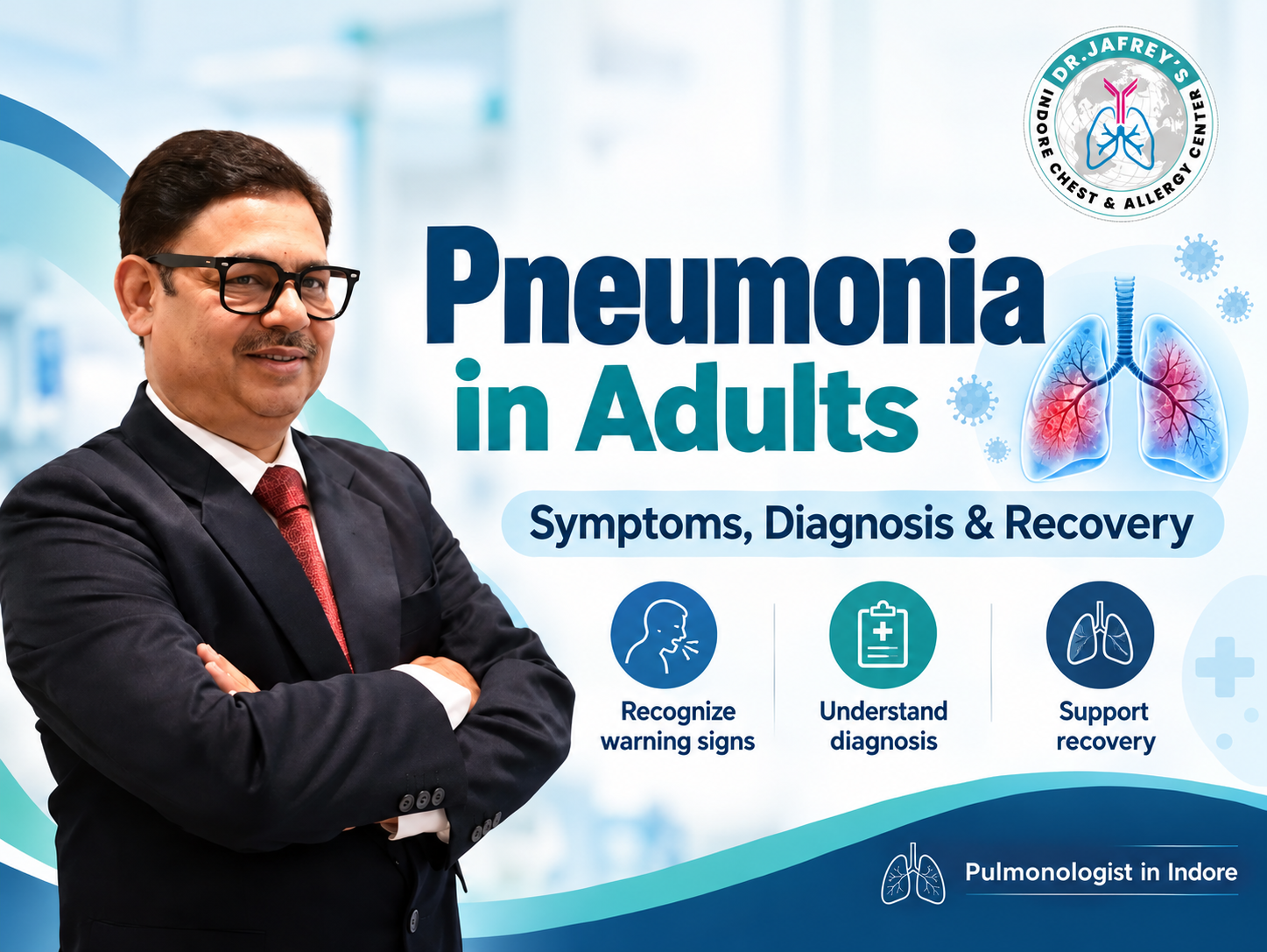
Pneumonia in Adults is a respiratory infection that causes inflammation in the lungs and can affect normal breathing. It may develop due to bacteria, viruses or other infectious organisms. Common symptoms include cough, fever, chills, chest discomfort, fatigue and shortness of breath. The severity varies from mild illness to a serious condition requiring hospitalisation.
Recognising Pneumonia Symptoms in Adults is important because the infection may sometimes resemble a common cold, flu or another respiratory illness. Older adults and people with chronic lung conditions, diabetes or weakened immunity may face a greater risk of complications.
Dr. S.Z. Jafrey, Allergist and Pulmonologist at Dr. Jafrey’s Indore Chest & Allergy Centre, evaluates respiratory and lung-related concerns. People searching for a Pulmonologist in Indore may benefit from medical assessment when a persistent cough, fever or breathing difficulty develops.
What Is Pneumonia?
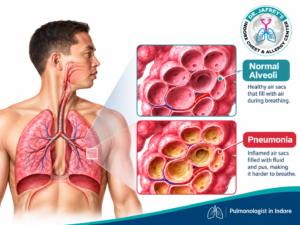
Pneumonia is an infection that affects one or both lungs. It can cause inflammation and fluid accumulation in the alveoli, the tiny air sacs responsible for exchanging oxygen.
The condition may be caused by bacterial or viral infections and, less commonly, fungal organisms. The symptoms and severity depend on the cause, the extent of lung involvement and the patient’s overall health.
What Are the Common Symptoms?
Pneumonia Symptoms in Adults may include persistent coughing, fever, chills, mucus production, chest pain during breathing, weakness and shortness of breath. Some people may also experience reduced appetite or confusion, particularly older adults.
Symptoms that persist or worsen should not be ignored. A medical professional can assess whether pneumonia or another respiratory condition may be responsible.
How Is Pneumonia Diagnosed?
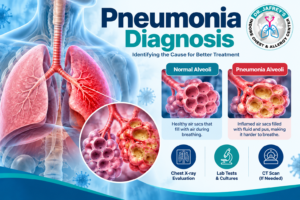
Pneumonia Diagnosis in Indore may involve a medical history, physical examination, oxygen saturation measurement and chest X-ray. Blood tests or sputum investigations may be recommended in selected cases.
The required tests depend on the patient’s symptoms and the suspected severity of infection. An accurate assessment helps determine the appropriate treatment approach.
What Treatment Is Available?
Pneumonia Treatment in Indore depends on the cause and severity of the infection. Bacterial pneumonia may require prescribed antibiotics, while selected viral infections may require antiviral medication. Severe cases may need hospital care, oxygen therapy and monitoring.
Patients should not take antibiotics without medical advice because these medicines do not treat viral infections. The treatment plan should be based on clinical findings and individual health needs.
How Long Does Recovery Take?
Recovery varies between individuals. Fever and acute symptoms may improve within days after effective treatment, while coughing, breathlessness and fatigue can persist for several weeks.
Adequate rest, appropriate fluid intake, prescribed medicines and follow-up care may support recovery. People experiencing worsening breathlessness, confusion or blue lips should seek emergency medical attention.
Why Consult Dr. S.Z. Jafrey?
Dr. S.Z. Jafrey is an Allergist and Pulmonologist at Dr. Jafrey’s Indore Chest & Allergy Centre. His respiratory and allergy specialisation is relevant to patients experiencing persistent cough, breathing difficulties and other lung-related symptoms.
People seeking Lung Infection Treatment in Indore should discuss their symptoms, medical history and any previous investigations with a qualified healthcare professional. The appropriate treatment depends on the diagnosis and individual clinical circumstances.
FAQs: Pneumonia in Adults
1. How is pneumonia treated in adults?
Pneumonia treatment depends on its cause, severity, and the patient’s overall health. Bacterial pneumonia is generally treated with prescribed antibiotics, while viral pneumonia may require supportive care or specific antiviral medicines in selected cases. Rest, adequate fluids, and monitoring of symptoms are also important. Severe cases may require hospitalisation and oxygen support.
2. How serious is pneumonia for adults?
Pneumonia can range from a mild infection to a serious condition. The risk may be higher in older adults and people with chronic lung disease, heart disease, diabetes, or weakened immunity. Difficulty breathing, confusion, bluish lips, or severe chest pain require urgent medical attention.
3. How long can a person survive with pneumonia?
Recovery varies depending on the cause, severity, age, and general health. Many adults improve within a few days of starting appropriate treatment, but cough and fatigue can continue for several weeks. Severe pneumonia can become life-threatening without timely medical care, so early assessment is important.
4. How can you prevent pneumonia when you have a cough?
Cover your mouth while coughing, wash your hands regularly, avoid smoking, stay hydrated, and get adequate rest. Follow medical advice if symptoms worsen, and discuss recommended vaccinations with your healthcare provider. A persistent or worsening cough should be evaluated rather than treated with self-medication.
5. What are the early symptoms of pneumonia in adults?
Early symptoms may include cough, fever, chills, fatigue, shortness of breath, and chest pain while breathing or coughing. Some adults, particularly older people, may experience confusion or weakness instead of a typical fever.
6. Can pneumonia go away on its own in adults?
Some mild respiratory infections may improve without specific treatment, but pneumonia should not be assumed to resolve on its own. Bacterial pneumonia may require antibiotics, and delayed treatment can lead to complications. Consult a healthcare professional if pneumonia is suspected.
7. How is pneumonia diagnosed in adults?
Diagnosis usually involves reviewing symptoms and medical history, checking temperature and oxygen levels, and examining the lungs. A chest X-ray, blood tests, or sputum tests may be recommended depending on the patient’s condition.
8. Is pneumonia contagious?
Pneumonia itself is a lung infection with several possible causes. Some viruses and bacteria that cause pneumonia can spread between people through respiratory droplets or close contact. Hand hygiene, covering coughs, and avoiding close contact while ill can help reduce transmission.
9. Who is at higher risk of developing pneumonia?
Older adults, young children, smokers, and people with chronic lung or heart conditions, diabetes, or weakened immune systems may have a higher risk. Previous respiratory infections and certain environmental exposures can also contribute to risk.
10. When should an adult with pneumonia seek emergency medical care?
Seek emergency care for severe breathing difficulty, bluish lips or face, new confusion, fainting, or severe chest pain. Prompt medical assessment is also important if fever persists, symptoms worsen, or the person cannot maintain adequate fluid intake.
Conclusion – Pulmonologist in Indore
Pneumonia in Adults requires timely recognition, appropriate diagnosis and treatment based on the cause and severity of infection. Understanding the symptoms and following medical advice can help patients manage the condition and recover safely.
Dr. S.Z. Jafrey, Allergist and Pulmonologist at Dr. Jafrey’s Indore Chest & Allergy Centre, evaluates respiratory concerns. Patients experiencing persistent or worsening symptoms should seek appropriate medical assessment rather than relying on self-medication.