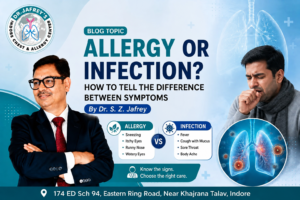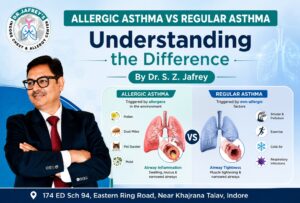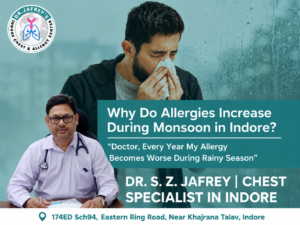
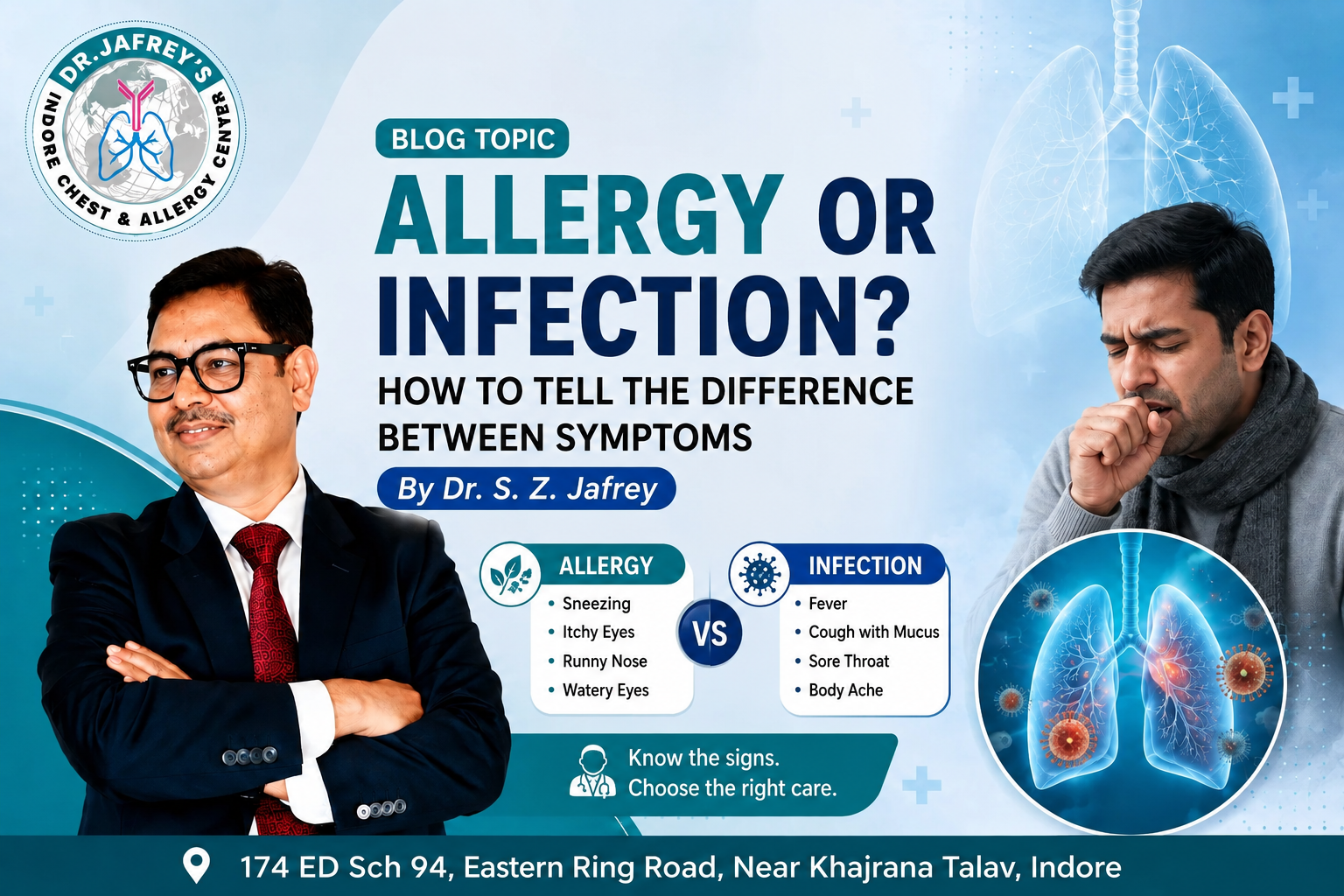
Allergy or Infection Treatment in Indore can be important when symptoms such as coughing, sneezing, nasal congestion, throat irritation, wheezing, or breathing difficulty continue or become worse. Allergies and respiratory infections can sometimes cause similar symptoms, making it difficult to determine the underlying cause without proper evaluation.
Allergies occur when the immune system reacts excessively to substances such as dust, pollen, pet dander, mold, or other allergens. Respiratory infections, on the other hand, are caused by microorganisms such as viruses or bacteria. Although both conditions may cause coughing and congestion, differences in symptom patterns, duration, fever, mucus, and exposure history can provide useful clues.
Dr. S. Z. Jafrey is an experienced Pulmonologist in Indore with more than 30 years of expertise in diagnosing and treating respiratory conditions, including allergies, asthma, COPD, lung infections, and other breathing disorders. Proper evaluation can help determine whether symptoms are related to an allergy, infection, or another respiratory condition.
What Is the Difference Between an Allergy and an Infection?
Allergy or Infection Treatment in Indore begins with identifying whether symptoms are caused by an immune response to an allergen or by an infectious microorganism.
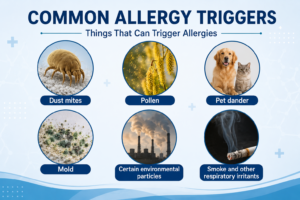
An allergy occurs when the immune system reacts to a normally harmless substance. Common allergens include:
- Dust mites
- Pollen
- Pet dander
- Mold
- Certain environmental particles
- Smoke and other respiratory irritants
A respiratory infection develops when viruses, bacteria, or other microorganisms affect the respiratory tract.
Common respiratory infections include:
- Common cold
- Influenza
- Acute bronchitis
- Pneumonia
- Other viral respiratory infections
- Certain bacterial infections
Some symptoms can overlap between allergies and infections, which is why persistent or severe symptoms may require assessment by a pulmonologist.
Allergy Symptoms
Allergy symptoms may develop after exposure to a particular allergen and may continue as long as the person remains exposed.
Common allergy symptoms include:
- Frequent sneezing
- Runny nose
- Nasal congestion
- Itchy nose
- Itchy or watery eyes
- Throat irritation
- Dry cough
- Postnasal drip
- Wheezing in some individuals
- Breathing difficulty in people with asthma
- Symptoms that recur after exposure to specific triggers
Allergies commonly cause itching of the eyes, nose, or throat, which is less typical of many respiratory infections.
Infection Symptoms
Respiratory infections may develop after exposure to an infected person or contaminated environment. Symptoms can vary depending on the specific infection.
Common symptoms may include:
- Cough
- Fever
- Chills
- Sore throat
- Body aches
- Fatigue
- Chest congestion
- Mucus or phlegm production
- Shortness of breath
- Headache
- Reduced appetite
Fever, chills, body aches, and a general feeling of illness are more suggestive of an infection than a typical environmental allergy.
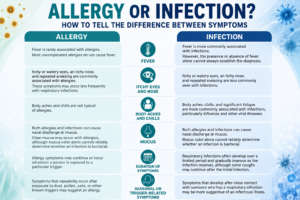
Allergy or Infection? Key Differences to Look For
Understanding the pattern of symptoms can sometimes provide clues about their possible cause.
Fever
Fever is more commonly associated with infections. Most uncomplicated allergies do not cause fever.
However, the presence or absence of fever alone cannot always establish the diagnosis.
Itchy Eyes and Nose
Itchy or watery eyes, an itchy nose, and repeated sneezing are commonly associated with allergies.
These symptoms may occur less frequently with respiratory infections.
Body Aches and Chills
Body aches, chills, and significant fatigue are more commonly associated with infections, particularly influenza and other viral illnesses.
Mucus
Both allergies and infections can cause nasal discharge or mucus.
Clear mucus may occur with allergies, although mucus color alone cannot reliably determine whether an infection is bacterial.
Duration of Symptoms
Allergy symptoms may continue or recur whenever a person is exposed to a particular trigger.
Respiratory infections often develop over a limited period and gradually improve as the infection resolves, although some coughs may continue after the initial infection.
Seasonal or Trigger-Related Symptoms
Symptoms that repeatedly occur after exposure to dust, pollen, pets, or other known triggers may suggest an allergy.
Symptoms that develop after close contact with someone who has a respiratory infection may be more suggestive of an infectious illness.
Can Allergies Cause Coughing and Breathing Problems?
Yes. Allergies can cause coughing, throat irritation, postnasal drip, and breathing symptoms in some individuals.
People with allergic asthma may experience:
- Wheezing
- Chest tightness
- Shortness of breath
- Recurrent cough
- Symptoms after exposure to allergens
Persistent respiratory symptoms should be evaluated because asthma, allergies, infections, and other lung conditions can sometimes produce similar complaints.
Can an Infection Trigger Allergy or Asthma Symptoms?
Respiratory infections can sometimes worsen existing asthma or other respiratory conditions.
A person with asthma may notice increased coughing, wheezing, or breathing difficulty during or after an infection.
Similarly, environmental allergens may aggravate respiratory symptoms in people who already have sensitive airways.
For this reason, identifying the underlying trigger is an important part of Allergy or Infection Treatment in Indore.
When Should You See a Pulmonologist?
Many mild respiratory symptoms improve with time, but medical evaluation becomes important when symptoms are persistent, severe, recurrent, or affecting normal daily activities.
You should consider consulting a pulmonologist if you experience:
- Persistent cough
- Recurrent wheezing
- Difficulty breathing
- Chest tightness
- High fever
- Chest pain
- Cough producing significant mucus
- Coughing up blood
- Repeated respiratory infections
- Symptoms that keep returning
- Breathing problems after exposure to allergens
- Symptoms that interfere with sleep or daily activities
Urgent medical attention is particularly important for severe breathing difficulty, bluish lips or face, confusion, severe chest pain, or other serious symptoms.
How Is Allergy or Infection Diagnosed?
Allergy or Infection Treatment in Indore depends on determining the likely cause of symptoms.
A pulmonologist may consider:
Medical History
The doctor may ask about:
- Duration of symptoms
- Fever
- Cough pattern
- Mucus production
- Allergy triggers
- Exposure to dust or pollen
- Contact with people who are sick
- Smoking or secondhand smoke exposure
- Previous respiratory infections
- Asthma or other lung conditions
Physical Examination
The lungs and respiratory system may be examined using a stethoscope. The doctor may listen for wheezing, crackling sounds, or other abnormal breathing sounds.
Allergy Testing
When an allergy is suspected, appropriate allergy testing may help identify specific allergens responsible for symptoms.
Blood Tests
Blood tests may sometimes be recommended to look for signs of infection or provide additional information about allergic or inflammatory conditions.
Chest X-Ray
A chest X-ray may be recommended when pneumonia or another significant lung condition is suspected.
Lung Function Tests
Pulmonary function testing may be useful when asthma or another airway condition is suspected, particularly when coughing or breathing difficulty is recurrent.
Allergy or Infection Treatment in Indore: Available Treatment Options
Treatment depends on the underlying cause, severity of symptoms, and the patient’s overall health.
For allergies, management may include:
- Avoiding identified allergens
- Antihistamine medicines when appropriate
- Nasal medications when recommended
- Inhaled medicines for associated asthma when prescribed
- Allergy-specific treatment in selected patients
- Environmental control measures
For respiratory infections, treatment may include:
- Adequate rest
- Sufficient fluids unless medically restricted
- Medicines for fever or discomfort when appropriate
- Antiviral treatment in selected infections
- Antibiotics when a bacterial infection is diagnosed or strongly suspected
- Oxygen therapy when medically required
- Treatment of underlying respiratory conditions
Antibiotics do not treat viral infections or allergies. Therefore, treatment should be selected according to the likely cause rather than symptoms alone.
How Can You Reduce Allergy and Respiratory Infection Triggers?
Several practical measures may help support respiratory health.
Doctors may recommend:
- Avoid known allergens whenever possible.
- Keep indoor areas clean and well ventilated.
- Reduce exposure to dust and smoke.
- Avoid smoking and secondhand smoke.
- Wash hands regularly.
- Avoid close contact with people who are actively ill when possible.
- Follow recommended vaccinations where appropriate.
- Keep asthma and other chronic respiratory conditions under control.
- Take prescribed medicines according to medical advice.
- Seek evaluation when symptoms become persistent or severe.
Identifying personal triggers can be particularly useful for people who experience recurrent allergy symptoms.
Why Choose Dr. S. Z. Jafrey as a Pulmonologist in Indore?
Dr. S. Z. Jafrey is an experienced Pulmonologist in Indore with more than 30 years of expertise in respiratory medicine. He specializes in the diagnosis and management of lung infections, allergies, asthma, COPD, sleep-related breathing disorders, and other respiratory conditions.
His qualifications include:
- Advanced Allergy Training – University Klinikum Münster, Germany
- Advanced Bronchoscopy Training – American College of Chest Physicians (ACCP), USA
- Proficiency Certificate – Maryland University, USA
His experience in respiratory medicine helps in evaluating persistent cough, recurrent allergies, breathing difficulties, wheezing, respiratory infections, and other symptoms that may require detailed pulmonary assessment.
Frequently Asked Questions About Allergy or Infection Treatment in Indore
1. How can I tell if my symptoms are caused by an allergy or infection?
Allergies commonly cause sneezing, itchy or watery eyes, runny nose, and symptoms related to specific triggers. Infections are more likely to cause fever, chills, body aches, fatigue, and a general feeling of illness. However, symptoms can overlap, so persistent or severe symptoms may require medical evaluation.
2. Can allergies cause a cough?
Yes. Allergies can cause coughing due to postnasal drip, throat irritation, or airway sensitivity. Allergic asthma can also cause recurrent cough, wheezing, and breathing difficulty.
3. Does fever always mean I have an infection?
Fever is commonly associated with infections, but it should be considered along with other symptoms. Most uncomplicated allergies do not cause fever.
4. Is green or yellow mucus always a sign of bacterial infection?
No. Mucus color alone cannot reliably determine whether an infection is bacterial. Other symptoms, duration, examination findings, and medical history may be needed to determine the cause.
5. When should I see a Pulmonologist in Indore?
Consider seeing a pulmonologist if you have a persistent cough, recurrent wheezing, breathing difficulty, repeated respiratory infections, chest discomfort, or symptoms that continue or interfere with daily activities.
6. Are antibiotics useful for allergies?
No. Antibiotics treat certain bacterial infections and do not treat allergies. Allergy management depends on identifying triggers and using appropriate treatments recommended by a healthcare professional.
7. Why choose Dr. S. Z. Jafrey for Allergy or Infection Treatment in Indore?
Dr. S. Z. Jafrey has more than 30 years of experience in respiratory medicine and specializes in the diagnosis and management of allergies, lung infections, asthma, COPD, and other respiratory disorders.
Conclusion – Allergy or Infection Treatment in Indore
Allergies and respiratory infections can produce similar symptoms, but important differences may include fever, itching, body aches, symptom triggers, mucus production, and the overall pattern and duration of illness. Identifying the underlying cause is important because allergies and infections require different approaches to management.
Persistent cough, recurrent wheezing, breathing difficulty, high fever, chest pain, or worsening respiratory symptoms should not be ignored. Early evaluation can help identify whether symptoms are related to allergies, infection, asthma, or another respiratory condition.
For persistent or recurrent respiratory symptoms, Allergy or Infection Treatment in Indore focuses on identifying the underlying cause and providing appropriate medical management. Consulting an experienced Pulmonologist in Indore can help support accurate diagnosis and appropriate respiratory care.