Chronic Cough Treatment in Indore can be important when coughing continues for several weeks, keeps returning, interferes with sleep, or occurs along with symptoms such as wheezing, breathlessness, chest discomfort, or excessive mucus. While coughing is a normal protective reflex that helps clear the airways, a persistent cough may sometimes indicate an underlying respiratory or non-respiratory condition.
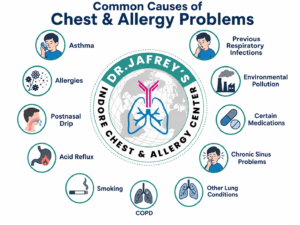
A chronic cough can have many possible causes. Common causes include asthma, allergies, postnasal drip, acid reflux, smoking, COPD, prolonged respiratory infections, and certain medications. In some cases, chronic cough may also be associated with other lung conditions that require detailed evaluation.
Dr. S. Z. Jafrey is an experienced Pulmonologist in Indore with more than 30 years of expertise in diagnosing and managing respiratory conditions, including chronic cough, asthma, COPD, allergies, lung infections, and other breathing disorders. Proper evaluation can help identify the underlying reason for persistent coughing and guide appropriate treatment.
What Is a Chronic Cough?
Chronic Cough Treatment in Indore begins with determining how long the cough has been present and identifying its pattern and associated symptoms.
A cough is considered chronic when it continues for an extended period rather than resolving as expected after a short-term illness. In adults, a cough lasting more than eight weeks is generally considered chronic. In children, the timeframe used to define chronic cough may be shorter.
A chronic cough may be:
- Dry or non-productive
- Associated with mucus or phlegm
- Worse at night
- Triggered by exercise
- Worse after exposure to dust or smoke
- Associated with wheezing
- Related to eating or lying down
- Intermittent or continuous
The nature of the cough can provide useful clues, but the cause cannot always be determined from symptoms alone.
Common Causes of Chronic Cough
Chronic cough can develop because of several different conditions. Some of the most common causes include:
- Asthma
- Allergies
- Postnasal drip
- Acid reflux
- Smoking
- COPD
- Previous respiratory infections
- Environmental pollution
- Certain medications
- Chronic sinus problems
- Other lung conditions
More than one factor may sometimes contribute to persistent coughing.
Chronic Cough Due to Asthma
Asthma is a common cause of persistent or recurrent cough. Some individuals may experience cough as the main symptom, while others may also have wheezing, chest tightness, or shortness of breath.
Asthma-related cough may become worse:
- At night
- During exercise
- After exposure to dust or pollen
- Around smoke or strong odors
- During respiratory infections
- In cold air
A pulmonologist may recommend lung function testing when asthma is suspected.
Appropriate asthma management can help control airway inflammation and reduce recurring cough.
Chronic Cough Due to Allergies
Allergies can contribute to coughing through airway irritation, nasal congestion, or postnasal drip.
Common allergy-related triggers include:
- Dust mites
- Pollen
- Pet dander
- Mold
- Environmental particles
- Smoke and other irritants
Allergic symptoms may include sneezing, runny nose, itchy eyes, nasal congestion, and throat irritation along with coughing.
When cough repeatedly occurs after exposure to specific allergens, evaluation for an underlying allergic or airway condition may be useful.
Postnasal Drip and Chronic Cough
Postnasal drip occurs when mucus from the nose or sinuses drains toward the back of the throat.
This may cause:
- Frequent throat clearing
- Throat irritation
- A sensation of mucus in the throat
- Coughing
- Hoarseness
- Nasal congestion
Postnasal drip may occur with allergies, sinus problems, infections, or other nasal conditions.
Identifying the underlying cause of excessive nasal mucus is important when postnasal drip contributes to a persistent cough.
Acid Reflux and Chronic Cough
Acid reflux can sometimes cause chronic cough, even when typical symptoms such as heartburn are not prominent.
Reflux-related cough may be more noticeable:
- After meals
- When lying down
- At night
- After consuming certain foods
- When bending over
Other possible symptoms include:
- Heartburn
- Sour taste in the mouth
- Throat irritation
- Hoarseness
- Frequent throat clearing
A healthcare professional can assess whether reflux may be contributing to persistent coughing and recommend appropriate management.
Smoking and Chronic Cough
Smoking is an important cause of chronic cough and can damage the respiratory system over time.
Tobacco smoke can irritate the airways and increase mucus production. Long-term smoking is also associated with chronic respiratory diseases, including COPD.
Smokers may experience:
- Persistent cough
- Phlegm production
- Wheezing
- Breathlessness
- Reduced exercise tolerance
A persistent cough in a current or former smoker should not automatically be considered a normal consequence of smoking. Medical evaluation may be important to identify underlying lung disease.
COPD and Chronic Cough
Chronic obstructive pulmonary disease, or COPD, can cause persistent cough, mucus production, wheezing, and breathlessness.
COPD is more commonly associated with long-term exposure to tobacco smoke, but other environmental and occupational exposures may also contribute.
Symptoms may include:
- Long-standing cough
- Regular mucus production
- Shortness of breath during activity
- Wheezing
- Chest tightness
- Reduced exercise capacity
- Recurrent respiratory infections
People with persistent respiratory symptoms should undergo appropriate assessment rather than assuming the symptoms are simply due to aging or smoking.
Can a Respiratory Infection Cause a Long-Lasting Cough?
Yes. A cough can continue for some time after a respiratory infection has improved.
This may happen because the airways remain sensitive or inflamed after the infection has resolved.
A post-infectious cough may gradually improve, but medical evaluation may be appropriate if:
- The cough is worsening
- It continues for an unusually long period
- Fever returns
- Breathing becomes difficult
- Chest pain develops
- Significant mucus or blood is produced
- Symptoms interfere with daily activities
Persistent symptoms may indicate another condition or a complication requiring further assessment.
Environmental Pollution and Chronic Cough
Exposure to air pollution, dust, smoke, and chemical fumes can irritate the respiratory tract and contribute to persistent coughing.
Environmental triggers may include:
- Vehicle emissions
- Construction dust
- Industrial pollutants
- Smoke from burning materials
- Indoor smoke
- Chemical fumes
- Tobacco smoke
People with asthma, COPD, allergies, or sensitive airways may experience more noticeable symptoms when air quality is poor.
Reducing exposure to respiratory irritants can be an important part of managing chronic cough.
When Is Chronic Cough a Warning Sign?
A persistent cough does not always indicate a serious disease, but certain associated symptoms require medical attention.
You should consider medical evaluation if you have:
- Cough lasting more than several weeks
- Cough that continues beyond the expected recovery period
- Recurrent or worsening cough
- Shortness of breath
- Wheezing
- Chest pain
- Unexplained weight loss
- Persistent fever
- Night sweats
- Cough producing significant mucus
- Coughing up blood
- Repeated respiratory infections
- Cough that regularly disrupts sleep
- Reduced ability to perform normal activities
Coughing up blood, severe breathing difficulty, severe chest pain, confusion, or rapidly worsening symptoms require urgent medical attention.
When Should You See a Pulmonologist?
You should consider consulting a Pulmonologist in Indore when chronic cough is persistent, recurrent, unexplained, or associated with other respiratory symptoms.
A pulmonologist may be particularly helpful when you have:
- Long-standing cough
- Recurrent wheezing
- Unexplained breathlessness
- Persistent mucus production
- Repeated chest infections
- Asthma symptoms
- COPD symptoms
- Cough associated with smoking
- Cough triggered by environmental exposure
- Cough that interferes with sleep
- Cough that does not improve with initial treatment
Early evaluation can help identify the underlying cause and prevent unnecessary or inappropriate treatment.
How Is Chronic Cough Diagnosed?
Chronic Cough Treatment in Indore depends on identifying the reason behind the persistent cough.
A pulmonologist may consider several aspects of the patient’s health.
Medical History
The doctor may ask about:
- How long the cough has been present
- Whether it is dry or productive
- Presence of mucus
- Time of day when coughing is worse
- Smoking history
- Exposure to dust or pollution
- Allergy symptoms
- Acid reflux symptoms
- Previous respiratory infections
- Current medications
- Asthma or COPD history
- Associated symptoms such as wheezing or breathlessness
Physical Examination
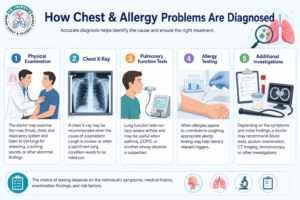
The doctor may examine the nose, throat, chest, and respiratory system and listen to the lungs for wheezing, crackling sounds, or other abnormal findings.
Chest X-Ray
A chest X-ray may be recommended when the cause of a persistent cough is unclear or when a significant lung condition needs to be ruled out.
Pulmonary Function Tests
Lung function tests can help assess airflow and may be useful when asthma, COPD, or another airway disorder is suspected.
Allergy Testing
When allergies appear to contribute to coughing, appropriate allergy testing may help identify relevant triggers.
Additional Investigations
Depending on the symptoms and initial findings, a doctor may recommend blood tests, sputum examination, CT imaging, bronchoscopy, or other investigations.
The choice of testing depends on the individual’s symptoms, medical history, examination findings, and risk factors.
Chronic Cough Treatment in Indore: Available Treatment Options
Treatment depends on the underlying cause of the cough rather than the cough alone.
Possible approaches may include:
For Asthma
Treatment may include prescribed inhaled medicines and measures to reduce exposure to known triggers.
For Allergies
Management may include allergen avoidance, appropriate antihistamine or nasal medications, and other treatments when recommended.
For Acid Reflux
Lifestyle modifications and medications may be considered depending on the individual’s symptoms and medical assessment.
For COPD
Management may include prescribed inhaled medicines, smoking cessation, pulmonary rehabilitation, vaccination, and other measures appropriate for the individual’s condition.
For Respiratory Infections
Treatment depends on whether the infection is viral, bacterial, or caused by another microorganism. Antibiotics are not appropriate for every respiratory infection.
For Environmental Exposure
Reducing exposure to smoke, dust, pollution, and chemical irritants can help reduce airway irritation.
Cough medicines should not be used repeatedly without understanding the underlying cause, particularly when cough is persistent.
How Can Chronic Cough Be Prevented or Reduced?
Some practical measures may help reduce the risk or severity of persistent coughing.
Doctors may recommend:
- Avoid smoking and secondhand smoke.
- Reduce exposure to dust and air pollution.
- Avoid known allergy triggers.
- Maintain good indoor ventilation.
- Address mold and dampness in indoor areas.
- Follow prescribed asthma or COPD treatment.
- Maintain appropriate hydration unless medically restricted.
- Practice good hand hygiene to reduce respiratory infections.
- Follow recommended vaccinations where appropriate.
- Manage acid reflux if it contributes to coughing.
- Seek medical evaluation when symptoms persist.
The most effective prevention strategy depends on the underlying cause of the cough.
Why Choose Dr. S. Z. Jafrey as a Pulmonologist in Indore?
Dr. S. Z. Jafrey is an experienced Pulmonologist in Indore with more than 30 years of expertise in respiratory medicine. He specializes in the diagnosis and management of chronic cough, asthma, COPD, allergies, lung infections, sleep-related breathing disorders, and other respiratory conditions.
His qualifications include:
- Advanced Allergy Training – University Klinikum Münster, Germany
- Advanced Bronchoscopy Training – American College of Chest Physicians (ACCP), USA
- Proficiency Certificate – Maryland University, USA
His experience in respiratory medicine helps in evaluating persistent cough, recurrent wheezing, breathing difficulty, mucus production, respiratory infections, and other symptoms that may require detailed pulmonary assessment.
Frequently Asked Questions About Chronic Cough Treatment in Indore
1. What is considered a chronic cough?
In adults, a cough lasting more than eight weeks is generally considered chronic. In children, the definition may involve a shorter duration. Persistent coughing should be evaluated when it does not resolve as expected.
2. What are the most common causes of chronic cough?
Common causes include asthma, allergies, postnasal drip, acid reflux, smoking, COPD, respiratory infections, environmental pollution, and certain medications.
3. Can allergies cause chronic coughing?
Yes. Allergies may cause coughing through postnasal drip, throat irritation, or airway sensitivity. Identifying and reducing exposure to relevant allergens may help manage symptoms.
4. Can acid reflux cause a chronic cough?
Yes. Acid reflux can irritate the throat and airways and may cause persistent coughing. Reflux-related cough can sometimes occur even without obvious heartburn.
5. Can smoking cause a chronic cough?
Yes. Smoking can irritate the airways, increase mucus production, and contribute to chronic respiratory diseases such as COPD. Persistent cough in smokers should be medically evaluated.
6. When should I see a Pulmonologist in Indore for chronic cough?
Consider seeing a pulmonologist if your cough persists for several weeks, keeps returning, or occurs with wheezing, breathlessness, chest pain, significant mucus, recurrent infections, or other concerning symptoms.
7. Is chronic cough always a sign of a serious disease?
No. Chronic cough can result from relatively common conditions such as allergies, asthma, reflux, or postnasal drip. However, persistent unexplained cough should be evaluated to identify the underlying cause.
8. Can a cough continue after a respiratory infection?
Yes. Some people develop a post-infectious cough that gradually improves after the initial infection has resolved. If the cough persists, worsens, or is accompanied by concerning symptoms, medical evaluation may be necessary.
9. Why choose Dr. S. Z. Jafrey for Chronic Cough Treatment in Indore?
Dr. S. Z. Jafrey has more than 30 years of experience in respiratory medicine and specializes in diagnosing and managing chronic cough, asthma, COPD, allergies, lung infections, and other respiratory disorders.
Conclusion – Chronic Cough Treatment in Indore
Chronic cough can have many possible causes, including asthma, allergies, postnasal drip, acid reflux, smoking, COPD, respiratory infections, and environmental irritants. Although coughing is a normal protective response, a cough that persists for several weeks or repeatedly returns should not be ignored.
The pattern of coughing, associated symptoms, medical history, medication use, smoking history, and exposure to environmental triggers can all help identify the underlying cause. Appropriate diagnostic testing may also be necessary in some individuals.
Persistent cough accompanied by wheezing, shortness of breath, chest pain, unexplained weight loss, persistent fever, significant mucus, or coughing up blood requires medical attention.
For persistent or recurrent coughing, Chronic Cough Treatment in Indore focuses on identifying the underlying cause and providing appropriate medical management. Consulting an experienced Pulmonologist in Indore can help support accurate diagnosis and appropriate long-term respiratory care.