
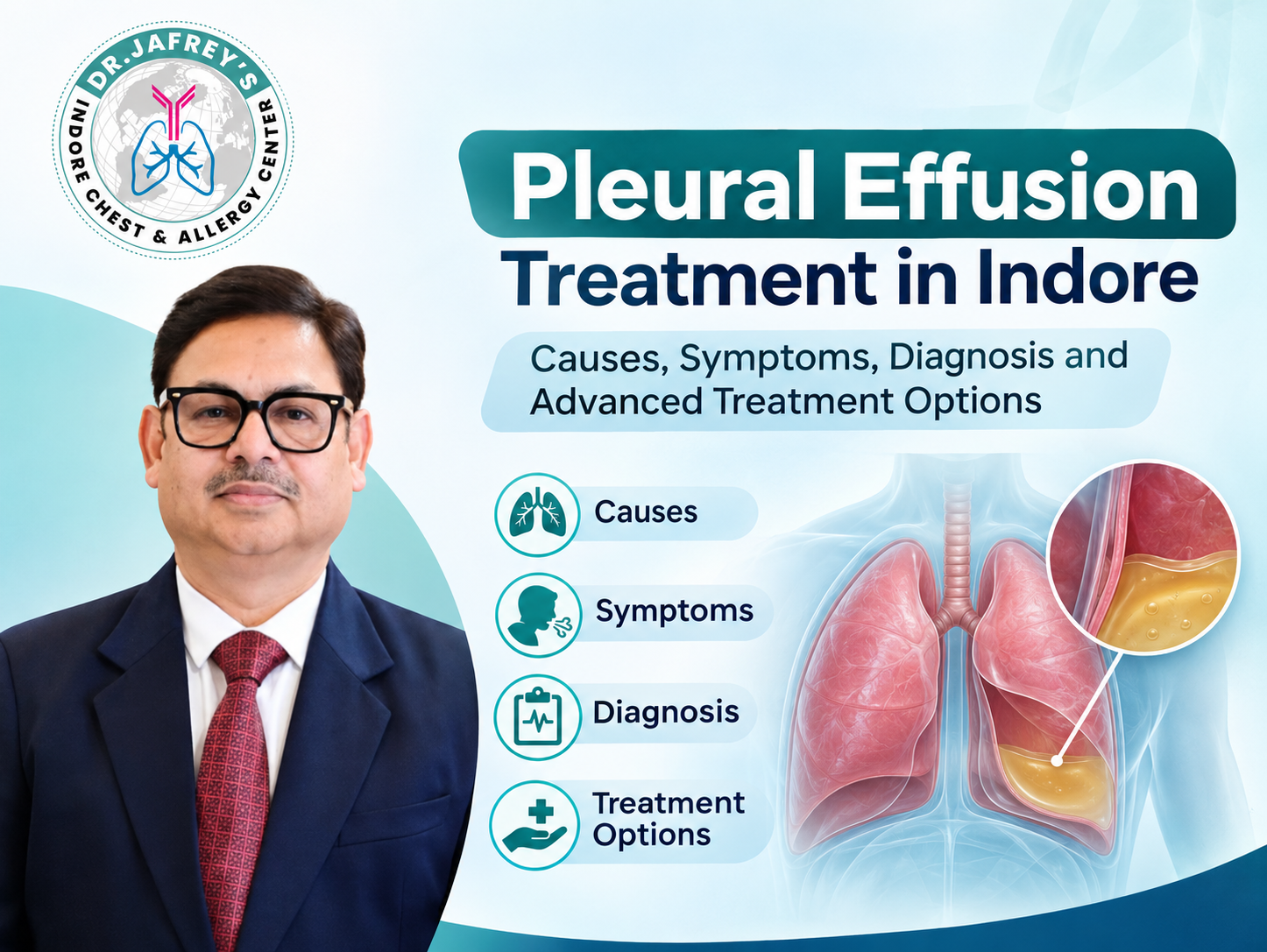
Pleural effusion is a medical condition in which excess fluid accumulates in the pleural space, the thin area between the lungs and the chest wall. Normally, a small amount of fluid is present in this space to help the lungs move smoothly during breathing. However, when too much fluid collects, it can restrict lung expansion and cause breathing difficulties, chest discomfort and other respiratory symptoms.
Understanding the causes and recognising the early warning signs are important for timely medical evaluation. Pleural Effusion Treatment in Indore focuses on identifying the underlying reason for fluid accumulation, relieving symptoms and preventing further complications. The condition may develop due to infections, heart-related problems, kidney or liver disorders, tuberculosis or certain cancers.
Dr. S.Z. Jafrey, Allergist and Pulmonologist at Dr. Jafrey’s Indore Chest & Allergy Centre, evaluates respiratory conditions and lung-related concerns. People searching for a Pulmonologist in Indore may benefit from specialist assessment when experiencing persistent breathlessness, chest discomfort or other symptoms associated with pleural effusion.
What Is Pleural Effusion?
Pleural effusion refers to the abnormal accumulation of fluid between the two layers of the pleura. The pleura consists of a visceral layer covering the lungs and a parietal layer lining the inside of the chest wall. Under normal conditions, a small quantity of lubricating fluid allows these layers to slide against each other during breathing. When the balance between fluid production and absorption is disturbed, excess fluid can accumulate.
Depending on the underlying cause, pleural effusion is generally classified into two main types:
1. Transudative Pleural Effusion
This type usually develops due to changes in pressure within blood vessels or reduced protein levels in the blood. Common associated conditions include congestive heart failure, liver cirrhosis and certain kidney disorders.
2. Exudative Pleural Effusion
This type occurs when inflammation, infection or damage affects the pleural tissues and increases fluid leakage. Common causes include tuberculosis, pneumonia, malignancy and other inflammatory conditions.
Identifying the type of fluid is important because treatment depends on the underlying medical condition rather than fluid accumulation alone.
What Are the Common Symptoms of Pleural Effusion?
The symptoms may vary depending on the amount of accumulated fluid, the speed at which it develops and the underlying cause. Some individuals may have a small pleural effusion without noticeable symptoms, while others may experience significant breathing difficulties.
Recognising Pleural Effusion Symptoms in Indore can help patients understand when respiratory evaluation may be necessary.
Common symptoms include:
-
Shortness of breath: Difficulty breathing, particularly during physical activity or while lying down.
-
Chest pain: Sharp or stabbing chest discomfort that may become worse during deep breathing, coughing or sneezing.
-
Persistent cough: A dry or irritating cough that may occur alongside fluid accumulation.
-
Fever: Fever and chills may develop when pleural effusion is associated with an infection.
-
Rapid breathing: Breathing may become faster when the lungs cannot expand normally.
-
Fatigue: Reduced oxygen intake and the underlying illness may contribute to weakness and tiredness.
The severity of symptoms does not always indicate the amount of fluid present. New or worsening breathlessness should be assessed promptly. Severe breathing difficulty or sudden chest pain requires emergency medical attention.
What Causes Pleural Effusion?
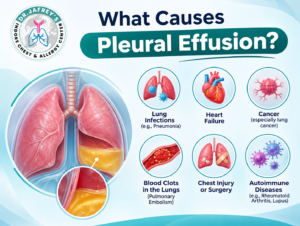
Pleural effusion can develop due to several medical conditions affecting the heart, lungs, kidneys, liver or pleural tissues. Identifying the underlying cause is an essential part of Pleural Effusion Treatment in Indore.
The common causes include:
1. Congestive Heart Failure
Heart failure is one of the common causes of transudative pleural effusion. When the heart cannot pump blood effectively, pressure may increase in blood vessels, causing fluid to accumulate around the lungs.
2. Tuberculosis
Tuberculosis can affect the pleural lining and cause inflammation and fluid accumulation. Tuberculous pleural effusion may develop with fever, night sweats, weight loss, cough and chest discomfort.
3. Pneumonia
Certain lung infections can spread inflammation to the pleural tissues, leading to fluid accumulation. In some cases, infected fluid may collect around the lungs and develop into a complicated parapneumonic effusion or empyema.
4. Lung Cancer
Some cancers, including lung cancer and cancers that spread to the pleura, can cause malignant pleural effusion. Symptoms may include persistent cough, breathlessness, chest discomfort and unexplained weight loss.
5. Kidney Disorders
Certain kidney conditions can disturb fluid balance within the body. This may contribute to fluid accumulation in different areas, including the pleural space.
6. Liver Disease
Advanced liver disease, particularly cirrhosis, can cause fluid accumulation due to changes in blood circulation and protein levels. In some patients, this may result in hepatic hydrothorax.
7. Pulmonary Embolism
A blood clot in the pulmonary arteries can sometimes cause pleural inflammation and fluid accumulation. It may also produce sudden breathlessness and chest pain.
A detailed clinical assessment helps determine which condition may be responsible for fluid accumulation.
How Is Pleural Effusion Diagnosed?
Diagnosis involves identifying the presence of fluid, estimating its quantity and determining the underlying medical condition. Pleural Effusion Diagnosis in Indore generally begins with a review of symptoms, medical history and physical examination.
A healthcare professional may recommend the following investigations:
1. Chest X-Ray
A chest X-ray is commonly used to identify fluid accumulation around the lungs. It can help detect the approximate location and extent of pleural effusion.
2. Chest Ultrasound
Ultrasound helps identify even small amounts of pleural fluid. It can also determine whether the fluid is free-flowing or divided into separate pockets. Ultrasound guidance is particularly useful during pleural fluid drainage.
3. CT Scan of the Chest
A CT scan provides detailed images of the lungs, pleura and surrounding structures. It may help identify infections, lung abnormalities, pleural thickening or possible malignant conditions.
4. Thoracentesis
Thoracentesis is a procedure in which a needle or catheter is inserted through the chest wall to remove a sample of pleural fluid. It may be performed for diagnostic purposes or to relieve breathlessness caused by fluid accumulation.
5. Blood Investigations
Blood tests may be recommended to assess infection, kidney function, liver function, protein levels and other underlying conditions.
A Chest Specialist in Indore may recommend different investigations depending on the patient’s symptoms, imaging findings and medical history. The combination of clinical assessment and imaging helps guide further evaluation.
What Is Pleural Fluid Analysis?
Pleural fluid analysis is an important investigation used to understand why fluid has accumulated around the lungs. During this process, a fluid sample obtained through thoracentesis is examined in a laboratory.
Pleural Fluid Analysis in Indore may include several tests depending on the suspected underlying condition.
Common investigations include:
-
Protein and LDH levels: These measurements help differentiate transudative and exudative pleural effusions using Light’s criteria.
-
Cell count and differential: Helps identify the types of cells present in the fluid and may provide clues about infection or inflammation.
-
Glucose levels: Low glucose levels may occur in conditions such as complicated infections, rheumatoid pleuritis and certain malignancies.
-
Pleural fluid pH: Particularly useful when a complicated parapneumonic effusion or pleural infection is suspected.
-
Gram stain and culture: Help identify bacteria responsible for pleural infections.
-
Cytology: Examines fluid cells for evidence of malignant disease.
-
ADA testing: May support the evaluation of tuberculous pleural effusion in the appropriate clinical setting.
The findings of Pleural Fluid Analysis in Indore are interpreted alongside symptoms, imaging and other laboratory investigations. Not every patient requires every test.
What Are the Advanced Treatment Options for Pleural Effusion?
Treatment depends on the underlying cause, the quantity of fluid, the severity of symptoms and the patient’s overall health. The main objectives are to treat the responsible condition, improve breathing and reduce the risk of fluid returning.
Pleural Effusion Treatment in Indore may involve medication, drainage procedures or specialised interventions depending on individual clinical findings.
1. Medication and Treatment of the Underlying Cause
When pleural effusion develops due to another medical condition, treating that condition is essential.
Depending on the diagnosis, treatment may include:
-
Diuretics for selected patients with heart failure.
-
Appropriate antibiotics for bacterial infections.
-
Anti-tuberculosis medicines for confirmed tuberculosis.
-
Specific treatment for underlying cancers.
-
Management of kidney or liver-related fluid imbalance.
Medication selection depends on the diagnosis. Antibiotics and other medicines should not be started without appropriate medical advice.
2. Therapeutic Thoracentesis
Therapeutic thoracentesis involves removing excess fluid from the pleural space using a needle or catheter. This procedure may help reduce breathlessness and improve lung expansion in patients with symptomatic pleural effusion. It is generally performed using imaging guidance when appropriate. The amount of fluid removed and the procedure’s monitoring requirements depend on the patient’s condition.
3. Intercostal Chest Tube Drainage
When a large amount of fluid accumulates or pleural infection develops, chest tube drainage may be required.
A small tube is inserted through the chest wall into the pleural space to allow continuous drainage. It is commonly used for complicated parapneumonic effusions and empyema.
4. Intrapleural Therapy
In selected patients with complicated pleural infections, intrapleural medications may be used to improve drainage. A combination of tissue plasminogen activator (tPA) and DNase may help break down fibrinous septations and improve fluid drainage when standard chest tube drainage is insufficient.
5. Indwelling Pleural Catheter
An indwelling pleural catheter is a flexible tube placed in the pleural space for repeated drainage. It may be considered for selected patients with recurrent malignant pleural effusion, particularly when ongoing fluid accumulation causes breathlessness.
6. Pleurodesis
Pleurodesis is a procedure intended to prevent fluid from collecting again by encouraging the pleural layers to stick together.
It may be considered in selected patients with recurrent malignant pleural effusion. The procedure can be performed using a chemical agent under appropriate medical supervision.
7. Thoracoscopy and Surgical Management
Medical thoracoscopy or video-assisted thoracoscopic surgery (VATS) may be recommended in selected cases. These procedures allow specialists to examine the pleural cavity, obtain tissue samples, manage certain infections and perform other interventions when necessary.A Lung Specialist in Indore can help assess respiratory symptoms and determine whether further specialist investigation or procedural management is required. Advanced procedures are selected according to the cause and complexity of the condition.
Can Pleural Effusion Become Serious?
Yes. Pleural effusion can become serious when a large amount of fluid restricts lung expansion or when it develops due to a significant underlying disease.
Possible complications include:
-
Reduced lung expansion and breathing difficulty.
-
Pleural infection and empyema.
-
Formation of scar tissue or pleural thickening.
-
Recurrent fluid accumulation.
-
Delayed diagnosis of an underlying infection or malignancy.
The risk depends on the underlying cause and the patient’s overall health. Early evaluation and appropriate management can help reduce complications.
How Can Pleural Effusion Be Prevented?
Not every case of pleural effusion can be prevented because some causes are associated with complex medical conditions. However, managing underlying diseases and seeking timely medical attention may reduce the risk of certain complications.
Practical measures include:
-
Follow the recommended treatment plan for heart, kidney and liver conditions.
-
Seek medical attention for persistent cough, fever or breathlessness.
-
Complete prescribed treatment for diagnosed respiratory infections and tuberculosis.
-
Attend follow-up appointments when advised.
-
Avoid smoking and exposure to respiratory irritants.
-
Do not ignore recurring chest discomfort or unexplained breathing difficulties.
People experiencing recurring respiratory symptoms can consult a Pulmonologist in Indore for appropriate clinical assessment. A Chest Specialist in Indore may also recommend follow-up imaging when necessary to monitor fluid accumulation.

When Should You Consult a Pulmonologist?
You should seek medical evaluation if you experience persistent breathlessness, unexplained chest pain, continuous coughing or fever accompanied by respiratory symptoms. A Pulmonologist in Indore can evaluate suspected pleural effusion and recommend suitable investigations based on the clinical findings. Consult a Chest Specialist in Indore if you have recurring chest discomfort, abnormal chest X-ray findings or breathing difficulties that do not improve. Early Pleural Effusion Diagnosis in Indore can help identify the underlying cause and determine whether medication, fluid drainage or further investigations are required. People searching for a Lung Specialist in Indore should consider specialist evaluation when respiratory symptoms persist or worsen.
Why Consult Dr. S.Z. Jafrey?
Dr. S.Z. Jafrey is an Allergist and Pulmonologist at Dr. Jafrey’s Indore Chest & Allergy Centre. He evaluates patients experiencing respiratory conditions, lung-related problems, allergic diseases and breathing difficulties.People looking for a Pulmonologist in Indore can discuss symptoms such as persistent cough, breathlessness, chest discomfort and suspected fluid accumulation around the lungs.
A Chest Specialist in Indore can help assess respiratory concerns through clinical evaluation and appropriate diagnostic investigations. Depending on the findings, patients may require imaging, pleural fluid testing or referral for specialised procedures. Individuals seeking Pleural Effusion Treatment in Indore should receive an individualised assessment to identify the cause of fluid accumulation and understand the appropriate treatment approach.
FAQs: Pleural Effusion
1. What is pleural effusion?
Pleural effusion is a condition in which excess fluid accumulates in the space between the lungs and chest wall. It may develop due to heart failure, tuberculosis, pneumonia, cancer and other medical conditions.
2. What are the common symptoms of pleural effusion?
Common Pleural Effusion Symptoms in Indore include breathlessness, chest pain, persistent cough, fever, rapid breathing and fatigue. Some patients may not experience noticeable symptoms when fluid accumulation is minimal.
3. What are the main causes of pleural effusion?
The common causes include congestive heart failure, tuberculosis, pneumonia, lung cancer, kidney disorders, liver disease and pulmonary embolism. Identifying the underlying condition is important for selecting appropriate treatment.
4. How is pleural effusion diagnosed?
Pleural Effusion Diagnosis in Indore may involve a chest X-ray, chest ultrasound, CT scan, blood investigations and thoracentesis. The doctor recommends tests according to the patient’s symptoms and clinical findings.
5. What is pleural fluid analysis?
Pleural Fluid Analysis in Indore involves examining fluid collected from the pleural space. Tests may include protein, LDH, glucose, pH, cell count, culture and cytology to help identify the underlying cause.
6. Is pleural effusion a serious condition?
It can be serious depending on its cause and severity. Large fluid accumulation, pleural infection and underlying malignancy may require prompt medical attention. Timely assessment helps guide appropriate management.
7. Can pleural effusion be treated without surgery?
Yes. Many cases can be managed through medication and treatment of the underlying condition. Some patients may require thoracentesis or chest tube drainage, while selected recurrent or complicated cases may need specialised procedures.
8. Does pleural effusion require fluid drainage?
Not every patient requires drainage. Small, asymptomatic effusions may be monitored while the underlying condition is treated. Drainage may be recommended when fluid causes significant symptoms, infection or other complications.
9. Can pleural effusion come back after treatment?
Yes. Pleural effusion can recur if the underlying condition remains active or if the cause cannot be completely controlled. Follow-up assessment helps identify recurrence and determine whether additional treatment is needed.
10. Which doctor should I consult for pleural effusion in Indore?
A Pulmonologist in Indore or an experienced Chest Specialist in Indore can evaluate pleural effusion and recommend appropriate investigations. Dr. S.Z. Jafrey at Dr. Jafrey’s Indore Chest & Allergy Centre evaluates respiratory and lung-related concerns.
Conclusion – Pleural Effusion Treatment in Indore
Pleural effusion is a condition that requires proper medical evaluation because fluid accumulation around the lungs can develop due to several underlying diseases. Recognising symptoms, identifying the cause and selecting appropriate treatment are essential for managing the condition.
Pleural Effusion Treatment in Indore may involve medication, thoracentesis, chest tube drainage, pleurodesis or other specialised procedures depending on the patient’s diagnosis. Early investigation can help prevent complications and support better respiratory management. Dr. S.Z. Jafrey, Allergist and Pulmonologist at Dr. Jafrey’s Indore Chest & Allergy Centre, evaluates respiratory symptoms and lung-related conditions. Individuals experiencing persistent breathlessness, chest pain or suspected pleural effusion should seek appropriate medical assessment.