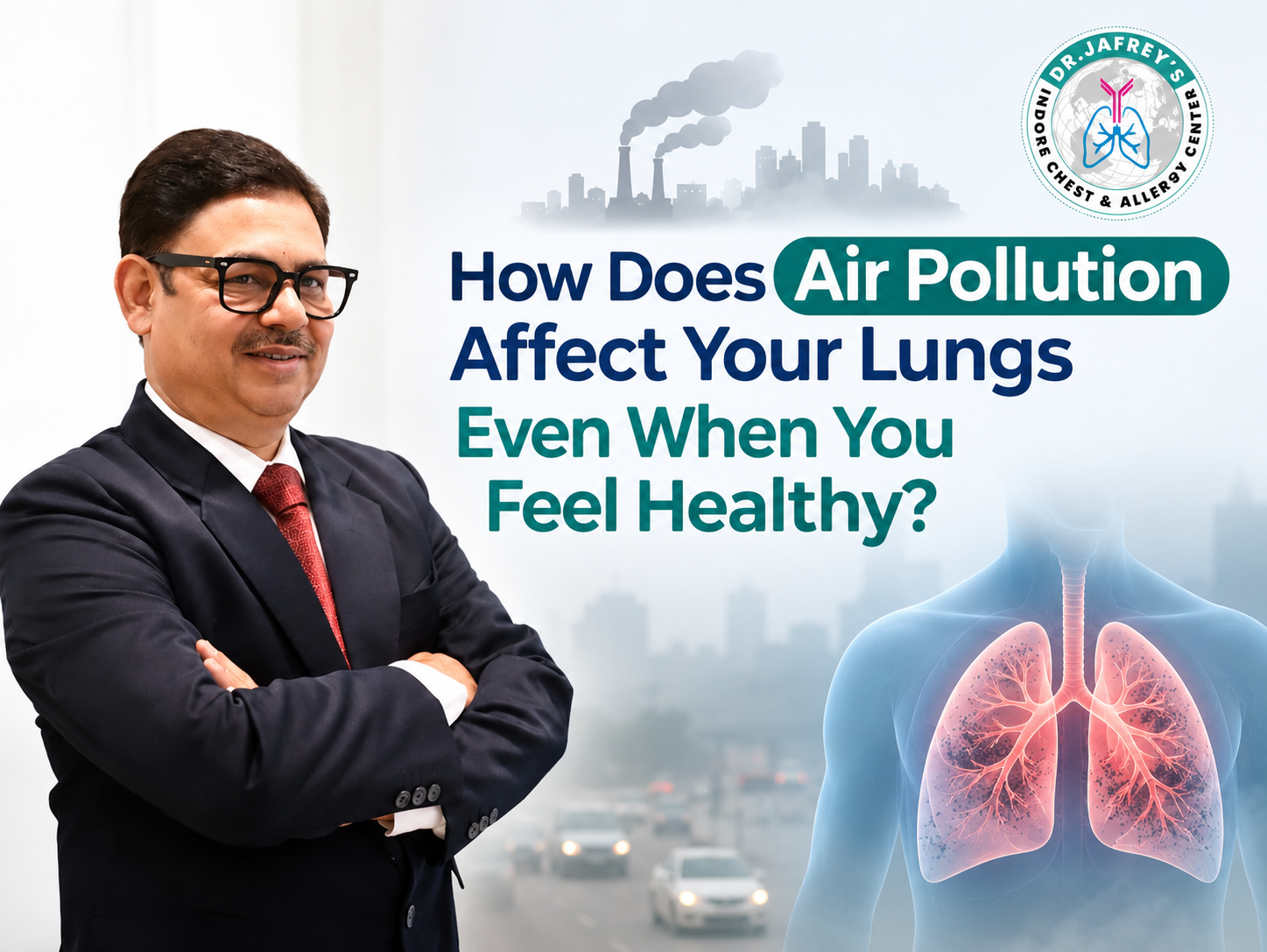
You may feel perfectly healthy, breathe normally and carry out your daily activities without difficulty. However, regular exposure to polluted air can affect your lungs even before noticeable symptoms appear. Tiny airborne particles can enter the respiratory system, irritate the airways and contribute to inflammation. Air pollution is not limited to visible smoke or dust. Fine particles, vehicle emissions, industrial pollutants and indoor pollutants can also affect respiratory health. The effects may vary depending on the level and duration of exposure, individual health and existing respiratory conditions.
At Dr. Jafrey’s Indore Chest & Allergy Center, Dr. S Z Jafrey focuses on understanding respiratory concerns through appropriate clinical evaluation. Knowing how pollution affects your lungs can help you recognise possible risks and understand when professional guidance from a Pulmonologist in Indore may be helpful.
How Air Pollution Affects Lung Health and Lung Disease Treatment in Indore
Your lungs continuously filter the air you breathe. When polluted air enters the respiratory system, the body’s natural defence mechanisms work to trap and remove harmful particles. However, repeated exposure to pollutants may irritate the airways and affect normal respiratory function. Some people experience coughing, wheezing or breathlessness, while others may not notice immediate changes. The absence of symptoms does not always mean that exposure has had no effect. Persistent respiratory concerns should be assessed by a qualified medical professional rather than ignored.
Understanding PM2.5 Exposure and Respiratory Health with a Pulmonologist in Indore
Air pollution contains particles of different sizes. Two commonly discussed categories are PM10 and PM2.5.
PM10 Particles and Lung Disease Treatment in Indore
PM10 refers to inhalable particles measuring up to 10 micrometres in diameter. These may include road dust, construction dust, pollen and other airborne particles. Some larger particles get trapped in the nose and upper respiratory tract. Others can travel deeper into the respiratory system and contribute to irritation.
PM2.5 Exposure and Respiratory Treatment in Khajrana, Indore
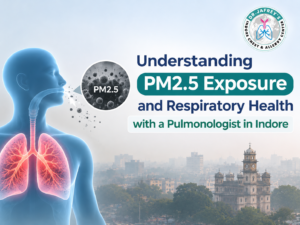
PM2.5 refers to fine particles measuring 2.5 micrometres or smaller. Because of their small size, they can travel deep into the lungs. Sources may include vehicle exhaust, industrial emissions, smoke from burning materials and certain indoor activities. Long-term exposure to fine particulate matter has been associated with respiratory and cardiovascular health risks. People with persistent symptoms may benefit from an assessment by a Pulmonologist in Indore.
Lung Inflammation and Respiratory Health: When to Consult a Pulmonologist in Indore
The lungs have natural protective mechanisms that respond when irritants enter the respiratory tract. Repeated exposure to polluted air can trigger irritation and inflammatory responses in some individuals.
Airway Irritation and Respiratory Treatment in Khajrana, Indore
Pollutants may irritate the lining of the airways. This can contribute to coughing, throat irritation, wheezing or discomfort while breathing. People with asthma or other existing respiratory conditions may be more sensitive to these irritants. If symptoms continue or become more frequent, a medical evaluation can help identify the underlying cause.
Oxidative Stress and Lung Disease Treatment in Indore
Fine particles and certain pollutants can contribute to oxidative stress, a process involving an imbalance between harmful free radicals and the body’s antioxidant defences. Oxidative stress is one of the mechanisms studied in relation to air pollution and respiratory health. Its effects depend on several factors, including exposure levels and individual health.
Increased Airway Sensitivity and Guidance from a Pulmonologist in Indore
Some people may develop increased sensitivity to airborne irritants. Exposure to dust, smoke or strong fumes can trigger coughing, chest tightness or breathing discomfort. A Pulmonologist in Indore can assess recurring symptoms and determine whether they are related to asthma, allergies, infections or another respiratory condition.
Six Possible Effects of Air Pollution on Lung Health and Lung Disease Treatment in Indore
Air pollution can affect individuals differently. Some possible respiratory effects include:
Persistent Cough and Respiratory Treatment in Khajrana, Indore
Repeated exposure to airborne irritants may contribute to a dry or persistent cough. A cough that continues should not automatically be attributed to pollution, as infections, allergies and other conditions can also cause it.
Wheezing and Breathing Concerns Evaluated by a Pulmonologist in Indore
Airway irritation may contribute to wheezing, particularly in people with asthma or sensitive airways.
Shortness of Breath and Lung Disease Treatment in Indore
Some individuals may experience breathlessness during physical activity or while exposed to polluted environments. Persistent or unexplained breathlessness requires medical assessment.
Increased Respiratory Sensitivity and a Pulmonologist in Indore
Pollution may make some people more sensitive to dust, smoke, pollen and other airborne irritants.
Worsening of Existing Respiratory Conditions and Lung Disease Treatment in Indore
People with asthma, COPD and other chronic lung conditions may experience worsening symptoms during periods of poor air quality.
Long-Term Respiratory Risks and Respiratory Treatment in Khajrana, Indore
Long-term exposure to air pollution has been associated with an increased risk of certain respiratory conditions. However, individual outcomes vary, and exposure does not mean that everyone will develop lung disease.
Indoor and Outdoor Pollution: Respiratory Treatment in Khajrana, Indore
Air pollution is not only an outdoor concern. The air inside homes, workplaces and other enclosed spaces may also contain irritants.
Common Sources of Indoor Air Pollution and Lung Disease Treatment in Indore
Indoor pollutants may come from:
- Tobacco smoke and second-hand smoke
- Cooking fumes, particularly where ventilation is inadequate
- Incense sticks, candles and mosquito coils
- Household cleaning chemicals and sprays
- Dust, mould and pet-related allergens
Improving ventilation where appropriate and reducing exposure to indoor irritants can support better respiratory health.
Outdoor Pollution Sources and Guidance from a Pulmonologist in Indore
Outdoor air pollution may come from:
- Vehicle exhaust and traffic congestion
- Construction and road dust
- Industrial emissions
- Waste burning and other smoke sources
- Seasonal changes and airborne particles
Checking local air-quality information can help people make informed decisions about outdoor activities.
People More Vulnerable to Air Pollution and Lung Disease Treatment in Indore
Although air pollution can affect anyone, some groups may be more vulnerable to its effects.
These include:
- Children, whose lungs are still developing
- Older adults
- People with asthma or COPD
- Individuals with existing heart or lung conditions
- People who work outdoors or experience frequent pollutant exposure
People in these groups should take appropriate precautions and seek medical advice if they experience recurring respiratory symptoms. A Pulmonologist in Indore can help evaluate symptoms and recommend suitable next steps.
Practical Ways to Reduce Pollution Exposure and Support Respiratory Health
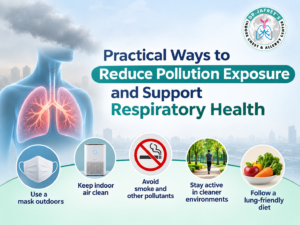
Reducing exposure cannot eliminate every risk, but certain everyday measures may help limit contact with airborne pollutants.
Checking Air Quality Before Outdoor Activities with a Pulmonologist in Indore
Check the Air Quality Index (AQI) before planning outdoor activities. During periods of poor air quality, consider reducing prolonged or strenuous outdoor exercise.
Using Suitable Masks and Supporting Lung Disease Treatment in Indore
A well-fitting N95 or equivalent respirator can help reduce exposure to fine particles when used correctly. Regular cloth masks may not provide the same level of filtration.
Improving Indoor Air Quality and Respiratory Treatment in Khajrana, Indore
Keep indoor spaces appropriately ventilated, avoid smoking indoors and reduce unnecessary use of products that release fumes. Address dampness and mould where present.
Following Healthy Habits with Advice from a Pulmonologist in Indore
Avoid tobacco smoke, maintain regular physical activity according to your health condition and follow prescribed treatment if you have an existing respiratory illness.
These measures support general respiratory health but do not replace medical evaluation when symptoms persist.
Pulmonary Function Tests and Lung Disease Treatment in Indore
A person may not always recognise changes in lung function through symptoms alone. When clinically indicated, a doctor may recommend respiratory investigations. A Pulmonary Function Test (PFT) measures aspects of how well the lungs work. Spirometry is one commonly used test that evaluates how much air a person can breathe out and how quickly. Depending on the symptoms and medical history, a doctor may also recommend other investigations.
A PFT cannot independently establish that air pollution caused a particular lung problem. The results need to be interpreted alongside clinical findings and other relevant information. Dr. S Z Jafrey may recommend appropriate respiratory evaluation based on an individual’s symptoms and medical history. A Pulmonologist in Indore can help determine whether testing is necessary rather than recommending it for everyone exposed to pollution.
Warning Signs of Respiratory Problems That Need a Pulmonologist in Indore
Do not ignore respiratory symptoms that persist, recur or gradually become more noticeable.
Consider seeking medical advice if you experience:
- A cough that does not improve
- Frequent wheezing
- Breathlessness during routine activities
- Repeated chest tightness
- Unusual discomfort while breathing
- Recurrent respiratory symptoms during periods of poor air quality
Severe breathlessness, chest pain, bluish lips, fainting or confusion require urgent medical attention.
Dr. S Z Jafrey can assess respiratory concerns and help identify whether they require further investigation or treatment. The appropriate approach depends on the cause of the symptoms.
Choosing Appropriate Respiratory Treatment in Khajrana, Indore
Respiratory symptoms can have several causes, including allergies, infections, asthma, COPD and environmental irritants. Therefore, treatment should be based on an appropriate diagnosis rather than air-pollution exposure alone. A medical assessment may involve reviewing symptoms, medical history, exposure patterns and examination findings. Further investigations may be advised when required.
At Dr. Jafrey’s Indore Chest & Allergy Center, Dr. S Z Jafrey provides respiratory evaluation based on individual clinical needs. People looking for respiratory care should discuss persistent symptoms with a qualified Pulmonologist in Indore to understand the possible cause and suitable treatment options.
Protecting Long-Term Lung Health with Guidance from a Pulmonologist in Indore
Lung health is influenced by several factors, including environmental exposure, lifestyle, existing medical conditions and individual susceptibility. Being aware of local air quality, limiting exposure to smoke and dust, avoiding tobacco and following appropriate medical advice can help support respiratory health.
Even when you feel healthy, it is useful to understand the quality of the air you breathe and recognise changes in your breathing. If symptoms develop or persist, timely evaluation can help identify the underlying concern. Dr. S Z Jafrey encourages a careful, symptom-based approach to respiratory health rather than ignoring recurring breathing difficulties.
Frequently Asked Questions About Air Pollution and Lung Disease Treatment in Indore
1. Can Air Pollution Affect Your Lungs Even Without Symptoms? When Should You Consult a Pulmonologist in Indore?
Yes. Air pollution may affect the respiratory system even when a person does not notice immediate symptoms. The effects depend on exposure levels, duration and individual health. A Pulmonologist in Indore can assess persistent respiratory concerns and advise whether further evaluation is needed.
2. How Does PM2.5 Exposure Affect Lung Health and the Need for Lung Disease Treatment in Indore?
PM2.5 particles are small enough to travel deep into the lungs. Repeated exposure has been associated with respiratory health risks. Lung Disease Treatment in Indore may be considered when a medical evaluation identifies an underlying condition that requires treatment.
3. Can Long-Term Air Pollution Cause Lung Inflammation?
Repeated exposure to certain pollutants may contribute to lung inflammation and airway irritation. The extent of the effect varies between individuals. A Pulmonologist in Indore can help investigate ongoing symptoms and identify possible causes.
4. When Should You Consider a Pulmonary Function Test for Respiratory Problems?
A Pulmonary Function Test may be recommended when someone has persistent cough, wheezing, unexplained breathlessness or suspected lung disease. A doctor providing Lung Disease Treatment in Indore can decide whether the test is appropriate based on symptoms and medical history.
5. How Can Indoor Air Pollution Affect Your Respiratory Health?
Indoor air pollution from tobacco smoke, cooking fumes, dust, mould and household chemicals may irritate the respiratory tract. Reducing these sources and improving ventilation where appropriate can support respiratory health. People with persistent symptoms may need Respiratory Treatment in Khajrana, Indore after medical evaluation.
6. Who Is at Greater Risk of Pollution-Related Lung Problems and May Need a Pulmonologist in Indore?
Children, older adults and people with asthma, COPD or existing heart and lung conditions may be more vulnerable to polluted air. A Pulmonologist in Indore can provide guidance when symptoms worsen or become frequent.
7. Does Wearing an N95 Mask Help Reduce the Effects of Air Pollution?
A properly fitted N95 respirator can reduce exposure to many fine airborne particles, including PM2.5. It should be used correctly and does not eliminate all exposure. People with ongoing breathing problems should seek medical advice rather than relying only on masks or other precautions.
8. When Should Persistent Cough or Breathlessness Be Evaluated for Lung Disease Treatment in Indore?
A persistent cough, recurring wheezing or unexplained breathlessness should be medically evaluated, especially if symptoms interfere with daily activities. Lung Disease Treatment in Indore depends on identifying the underlying cause and selecting an appropriate treatment approach.
9. How Can a Pulmonologist in Indore Assess the Effects of Air Pollution on Your Lungs?
A Pulmonologist in Indore may review your symptoms, medical history and exposure to pollutants, perform a clinical examination and recommend investigations such as spirometry when needed. No single test can confirm that pollution is the cause of every respiratory problem.
10. Where Can You Seek Respiratory Treatment in Khajrana, Indore for Pollution-Related Breathing Problems?
If you experience persistent cough, wheezing or breathlessness, consult a qualified respiratory specialist for an assessment. Dr. Jafrey’s Indore Chest & Allergy Center provides respiratory evaluation with Dr. S Z Jafrey. The appropriate Respiratory Treatment in Khajrana, Indore depends on the diagnosis and individual clinical needs.
Conclusion: Protecting Your Lungs with a Pulmonologist in Indore
Air pollution can affect respiratory health even when noticeable symptoms are absent. Fine particles such as PM2.5 may reach deep into the lungs, while repeated exposure to pollutants can contribute to airway irritation and other respiratory concerns. Understanding pollution levels, reducing avoidable exposure and paying attention to persistent symptoms are important steps towards protecting your lungs.
If you experience recurring cough, wheezing or breathlessness, consult a qualified specialist for an appropriate evaluation. Dr. S Z Jafrey at Dr. Jafrey’s Indore Chest & Allergy Center can help assess respiratory concerns and guide patients towards suitable care.