Sleep Apnea Treatment in Indore is important for people who experience loud snoring, interrupted breathing during sleep, morning headaches, excessive daytime sleepiness, or repeated nighttime awakenings. Sleep apnea is a sleep-related breathing disorder in which breathing repeatedly stops and starts during sleep Dr. S Z JAFREY . Obstructive sleep apnea occurs when the upper airway becomes blocked, while central sleep apnea develops when the brain does not send the appropriate signals needed for breathing.
Although occasional snoring may be harmless, loud and frequent snoring accompanied by choking, gasping, breathing pauses, or daytime fatigue may indicate an underlying sleep disorder. Identifying the cause early can help improve sleep quality, daytime alertness, and overall respiratory health.
A Sleep Apnea Specialist in Indore evaluates symptoms, medical history, sleep patterns, risk factors, and breathing difficulties to determine whether further testing is required. Diagnosis and treatment depend on the type and severity of sleep apnea.
Dr. S. Z. Jafrey is an experienced Pulmonologist in Indore with over 30 years of expertise in managing asthma, allergies, respiratory diseases, and breathing-related conditions. His advanced allergy training from University Klinikum Münster, Germany, and bronchoscopy training from the American College of Chest Physicians (ACCP), USA, support comprehensive evaluation and evidence-based respiratory care.
What Is Sleep Apnea?
Sleep apnea is a condition in which breathing repeatedly stops and restarts during sleep. These interruptions can reduce oxygen levels and disturb normal sleep patterns. Obstructive sleep apnea is the most common type and generally occurs because the upper airway becomes narrowed or blocked during sleep.
Common symptoms include:
- Loud or frequent snoring
- Breathing pauses during sleep
- Gasping or choking during sleep
- Excessive daytime sleepiness
- Morning headaches
- Dry mouth after waking
- Difficulty concentrating
- Frequent nighttime awakenings
- Fatigue despite adequate time in bed
What Causes Snoring and Sleep Apnea?
Snoring occurs when airflow through the nose and throat becomes partially restricted during sleep. Several factors can increase the likelihood of obstructive sleep apnea and loud snoring, including:
- Excess body weight
- Narrow upper airway
- Enlarged tonsils or other airway structures
- Sleeping on the back
- Nasal congestion
- Alcohol consumption
- Smoking
- Family history of sleep apnea
- Certain hormonal or medical conditions
Not everyone who snores has sleep apnea. However, persistent loud snoring combined with breathing pauses or daytime sleepiness should be medically evaluated.
Symptoms That May Require Sleep Apnea Treatment in Indore
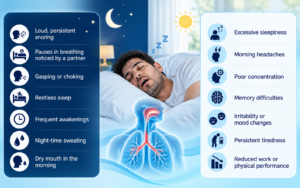
People with sleep apnea may experience symptoms during both night and daytime.
Night-Time Symptoms
- Loud, persistent snoring
- Pauses in breathing noticed by a partner
- Gasping or choking
- Restless sleep
- Frequent awakenings
- Night-time sweating
- Dry mouth in the morning
Daytime Symptoms
- Excessive sleepiness
- Morning headaches
- Poor concentration
- Memory difficulties
- Irritability or mood changes
- Persistent tiredness
- Reduced work or physical performance
If these symptoms occur regularly, evaluation by a Chest Physician in Indore or sleep specialist can help determine whether a sleep-related breathing disorder is present.
How Is Sleep Apnea Diagnosed?
Diagnosis begins with a detailed evaluation of symptoms, sleep habits, medical history, medications, family history, and possible risk factors. A physical examination may also be performed to assess factors that can contribute to airway obstruction.
Depending on the symptoms and clinical findings, the doctor may recommend a sleep study.
Sleep Study
A sleep study, also called polysomnography, records different body functions during sleep. Depending on the type of study, measurements may include brain activity, heart rate, breathing, airflow, respiratory effort, and blood oxygen levels.
A sleep study can help determine:
- Whether sleep apnea is present
- The type of sleep apnea
- Frequency of breathing interruptions
- Changes in oxygen levels
- Severity of the condition
- Appropriate treatment options
In selected patients, a home sleep apnea test may be appropriate. The choice between home testing and an overnight laboratory sleep study depends on the patient’s symptoms, health status, and clinical assessment.
Sleep Apnea Treatment in Indore: Available Treatment Options
Treatment depends on the type and severity of sleep apnea, associated health conditions, and individual needs.
Common treatment approaches include:
- Positive airway pressure therapy
- CPAP therapy
- APAP or other PAP devices when appropriate
- Oral appliances for selected patients
- Weight management
- Positional therapy
- Lifestyle modifications
- Treatment of nasal or airway problems
- Surgical procedures in selected cases
The main goal of treatment is to maintain an open airway during sleep and reduce breathing interruptions.
What Is CPAP and How Does It Work?
CPAP stands for Continuous Positive Airway Pressure. It uses mild, continuous air pressure delivered through a mask to help keep the airway open while a person sleeps.
A CPAP system generally includes:
- A CPAP machine
- Nasal or full-face mask
- Tubing
- Air pressure controls
- Optional humidification
For people with obstructive sleep apnea who are prescribed CPAP, regular use can reduce breathing interruptions and may improve snoring, sleep quality, and daytime sleepiness.
Some patients may initially experience nasal congestion, dry mouth, runny nose, or mask discomfort. Proper mask fitting, humidification, and follow-up can help address these issues.
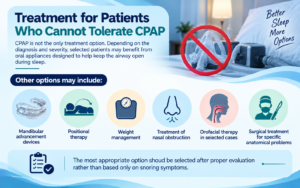
Treatment for Patients Who Cannot Tolerate CPAP
CPAP is not the only treatment option. Depending on the diagnosis and severity, selected patients may benefit from oral appliances designed to help keep the airway open during sleep.
Other options may include:
- Mandibular advancement devices
- Positional therapy
- Weight management
- Treatment of nasal obstruction
- Orofacial therapy in selected cases
- Surgical treatment for specific anatomical problems
The most appropriate option should be selected after proper evaluation rather than based only on snoring symptoms.
Lifestyle Tips to Support Sleep Disorder Treatment in Indore
Healthy lifestyle habits can support better sleep and may contribute to improved sleep apnea control.
- Maintain a healthy weight.
- Exercise regularly as advised by your doctor.
- Follow a consistent sleep schedule.
- Avoid smoking.
- Limit alcohol, particularly near bedtime.
- Sleep on your side if recommended.
- Keep nasal passages clear when congestion is present.
- Use prescribed CPAP or other devices consistently.
- Attend regular follow-up appointments.
Lifestyle measures are generally used alongside medical treatment when appropriate rather than as a substitute for prescribed therapy.
Why Choose Dr. S. Z. Jafrey for Sleep Apnea Treatment in Indore?
Dr. S. Z. Jafrey has over 30 years of experience in treating respiratory conditions, asthma, allergies, and complex breathing disorders. His international training and experience in respiratory medicine support detailed assessment of patients with breathing-related sleep problems.
His achievements include:
- Advanced Allergy Training – University Klinikum Münster, Germany
- Advanced Bronchoscopy Training – American College of Chest Physicians (ACCP), Chicago, USA
- Proficiency Certificate – Maryland University, USA
- Most Inspiring Pulmonologist in India – 2019
- Inspiring Chest Specialist of India – 2024
For patients experiencing persistent snoring, breathing pauses, nighttime choking, or excessive daytime sleepiness, evaluation by Dr. S. Z. Jafrey can help identify whether an underlying sleep-related breathing disorder requires further investigation.
Frequently Asked Questions About Sleep Apnea Treatment in Indore
1. What is sleep apnea?
Sleep apnea is a sleep-related breathing disorder in which breathing repeatedly stops and starts during sleep. Obstructive sleep apnea occurs when the upper airway becomes blocked, while central sleep apnea is related to reduced or absent breathing signals from the brain.
2. Is loud snoring always a sign of sleep apnea?
No. Snoring can occur without sleep apnea. However, loud persistent snoring combined with breathing pauses, gasping, choking, or excessive daytime sleepiness may require further evaluation.
3. What is a sleep study?
A sleep study is a diagnostic test that monitors different body functions during sleep, including breathing, oxygen levels, heart rate, and other physiological signals. It helps determine whether sleep apnea or another sleep disorder is present.
4. Is CPAP effective for sleep apnea?
CPAP is a common treatment for obstructive sleep apnea. It provides continuous positive airway pressure to help keep the airway open during sleep. Consistent use can reduce apnea-related breathing interruptions and improve symptoms such as snoring and daytime sleepiness.
5. Can sleep apnea be treated without CPAP?
Some patients may have alternative options, such as oral appliances, positional therapy, lifestyle measures, or selected surgical procedures. The appropriate treatment depends on the type and severity of sleep apnea and individual clinical factors.
6. When should I see a Sleep Apnea Specialist in Indore?
Evaluation is appropriate when loud snoring is accompanied by witnessed breathing pauses, gasping, choking during sleep, excessive daytime sleepiness, morning headaches, or persistent fatigue.
Conclusion – Sleep Apnea Treatment in Indore
Understanding the symptoms of sleep apnea and distinguishing persistent snoring from a sleep-related breathing disorder is important for timely diagnosis. A sleep study can help identify breathing interruptions, oxygen changes, and the severity of sleep apnea, while treatment may include CPAP, other positive airway pressure devices, oral appliances, lifestyle changes, or selected procedures.
If loud snoring, breathing pauses, daytime sleepiness, or repeated nighttime awakenings are affecting daily life, Sleep Apnea Treatment in Indore can begin with a detailed respiratory and sleep evaluation. Appropriate diagnosis and regular follow-up can help improve sleep quality and breathing during sleep.