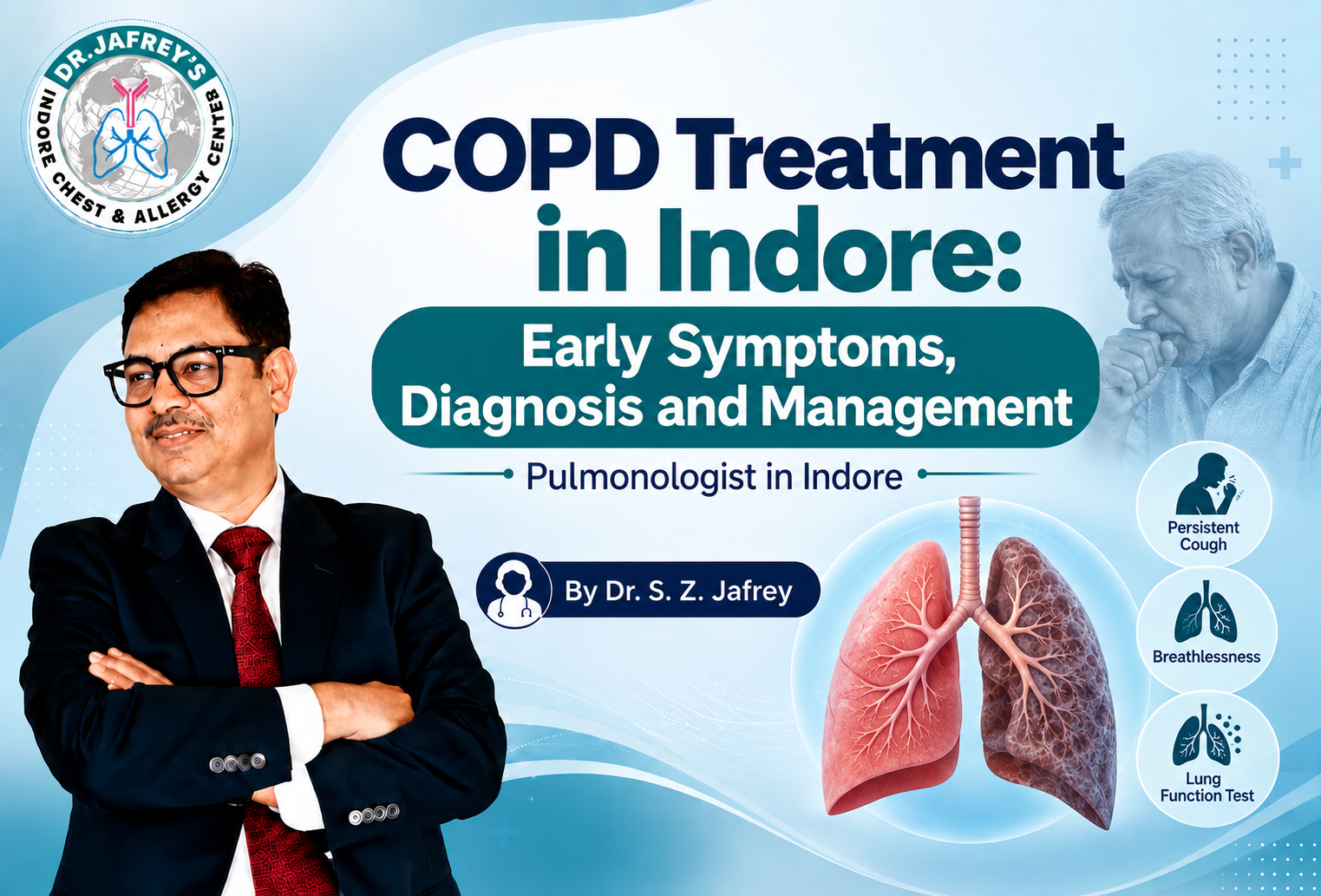
COPD Treatment in Indore can be important for people who experience persistent cough, mucus production, wheezing, breathlessness, chest tightness, or reduced ability to perform physical activities. Chronic obstructive pulmonary disease (COPD) is a long-term respiratory condition that can progressively affect airflow and make breathing more difficult.
COPD commonly develops after long-term exposure to tobacco smoke and other harmful particles or gases. However, not every person with COPD has the same risk factors or symptoms. Early symptoms may sometimes be mild and may be mistaken for normal aging, lack of fitness, or repeated respiratory infections.
Dr. S. Z. Jafrey is an experienced Pulmonologist in Indore with more than 30 years of expertise in diagnosing and managing respiratory conditions, including COPD, asthma, allergies, lung infections, and other breathing disorders. Early pulmonary evaluation can help identify COPD and support an appropriate long-term management plan.
What Is COPD?
COPD Treatment in Indore begins with understanding what COPD is and how it affects the respiratory system.
COPD is a chronic lung disease characterized by persistent respiratory symptoms and airflow limitation. It commonly includes conditions such as chronic bronchitis and emphysema.
COPD can affect the airways and lung tissue, making it more difficult for air to move in and out of the lungs.
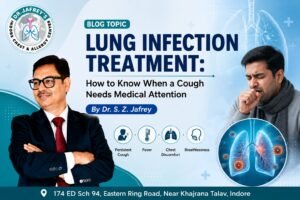
Common symptoms may include:
- Persistent cough
- Mucus or phlegm production
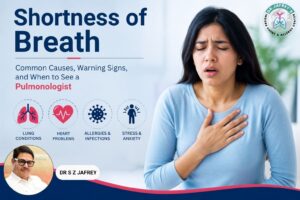
- Shortness of breath
- Wheezing
- Chest tightness
- Reduced exercise tolerance
- Fatigue
- Recurrent respiratory infections
COPD is treatable and preventable in many cases, and early recognition can help improve long-term disease management. Current GOLD guidance emphasizes individualized assessment and management based on symptoms, exacerbation risk, and other clinical factors.
What Causes COPD?
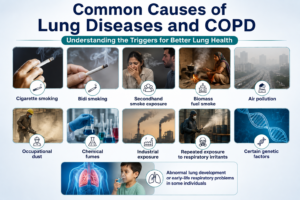
COPD can develop after prolonged exposure to substances that irritate and damage the lungs.
Important risk factors include:
- Cigarette smoking
- Bidi smoking
- Secondhand smoke exposure
- Biomass fuel smoke
- Air pollution
- Occupational dust
- Chemical fumes
- Industrial exposure
- Repeated exposure to respiratory irritants
- Certain genetic factors
- Abnormal lung development or early-life respiratory problems in some individuals
Smoking remains an important risk factor, but COPD can also occur in people who have never smoked, particularly when there has been significant exposure to biomass smoke, occupational pollutants, or other risk factors.
Early Symptoms of COPD
Early COPD symptoms can be gradual and may not initially appear severe. Some people may adjust their activities to avoid becoming breathless without realizing that lung function may be affected.
Common early symptoms include:
- Persistent cough
- Regular mucus production
- Breathlessness during physical activity
- Wheezing
- Chest tightness
- Reduced exercise capacity
- Frequent respiratory infections
- Tiredness
- Longer recovery after respiratory infections
A persistent cough or increasing breathlessness should not simply be considered a normal part of aging, particularly in people with a history of smoking or significant exposure to dust, smoke, or fumes.
The American Lung Association also identifies shortness of breath, cough with mucus, and chest tightness among common COPD symptoms and emphasizes the importance of early detection.
How Does COPD Affect Breathing?
COPD can interfere with normal airflow through changes in the airways and lung tissue.
Airway Inflammation
Long-term exposure to smoke or other irritants can contribute to airway inflammation.
Increased Mucus
Some people with COPD produce excess mucus, which can contribute to persistent cough and difficulty clearing the airways.
Airflow Limitation
Changes in the airways and lungs can make it harder for air to move normally, particularly during exhalation.
Reduced Exercise Tolerance
As breathing becomes more difficult, activities such as walking, climbing stairs, or exercising may become increasingly challenging.
Breathlessness
Breathlessness may initially occur only during physical activity but can become more noticeable as COPD progresses.
COPD Symptoms That Should Not Be Ignored
Some symptoms may indicate that a person needs pulmonary evaluation.
You should consider medical assessment if you experience:
- Cough lasting for several weeks or longer
- Regular mucus production
- Breathlessness during routine activities
- Wheezing
- Chest tightness
- Reduced walking or exercise capacity
- Frequent chest infections
- Symptoms that are gradually worsening
- Breathlessness that interferes with daily activities
- Repeated episodes of increased cough or mucus
People with significant smoking or occupational exposure may benefit from evaluation even when symptoms appear mild.
Can Smoking Cause COPD?
Yes. Long-term tobacco smoke exposure is one of the major risk factors for COPD.
Smoking can damage the airways and lung tissue and may contribute to persistent inflammation and airflow limitation.
People who smoke may notice:
- Chronic cough
- Morning mucus
- Wheezing
- Breathlessness
- Reduced exercise tolerance
- Repeated respiratory infections
Stopping smoking is an important component of COPD prevention and management. Current GOLD guidance includes identifying and reducing exposure to risk factors and treating tobacco dependence as part of COPD care.
Can Air Pollution Worsen COPD?
Yes. Air pollution can irritate the respiratory system and may worsen symptoms in people with COPD.
Potential environmental triggers include:
- Vehicle emissions
- Construction dust
- Industrial pollution
- Smoke from burning materials
- Indoor cooking smoke
- Tobacco smoke
- Chemical fumes
- Fine particulate matter
People with COPD may experience increased cough, mucus production, wheezing, or breathlessness during periods of poor air quality.
Reducing exposure to known environmental triggers is an important part of respiratory health management.
COPD and Respiratory Infections
People with COPD may experience respiratory infections that can significantly worsen their usual symptoms.
During an exacerbation, a person may notice:
- Increased cough
- Increased mucus
- Change in mucus characteristics
- Increased breathlessness
- Wheezing
- Reduced ability to perform normal activities
- Fatigue
A significant or rapidly worsening change in symptoms may require prompt medical assessment.
COPD management includes assessment and management of exacerbations as an important part of ongoing care.
When Should You See a Pulmonologist?
You should consider consulting a Pulmonologist in Indore if you experience persistent or worsening respiratory symptoms.
Medical evaluation is particularly important when you have:
- Persistent cough
- Regular mucus production
- Recurrent wheezing
- Shortness of breath
- Breathlessness while walking
- Difficulty climbing stairs
- Reduced exercise tolerance
- Repeated chest infections
- A long history of smoking
- Significant exposure to dust or fumes
- Increasing respiratory symptoms with age
Urgent medical attention is important for severe breathing difficulty, bluish lips or face, confusion, severe chest pain, or rapidly worsening symptoms.
How Is COPD Diagnosed?
COPD Treatment in Indore depends on an accurate diagnosis and assessment of the severity and characteristics of the disease.
A pulmonologist may consider several factors.
Medical History
The doctor may ask about:
- Duration of cough
- Mucus production
- Breathlessness
- Smoking history
- Bidi or cigarette exposure
- Secondhand smoke exposure
- Occupational dust or chemical exposure
- Air pollution exposure
- Previous respiratory infections
- Asthma or allergy history
- Exercise tolerance
- Previous hospitalizations
- Current medications
Physical Examination
The doctor may examine the chest and respiratory system and listen to the lungs for wheezing, reduced breath sounds, crackling sounds, or other abnormalities.
Spirometry
Spirometry is an important test used to assess airflow and help confirm COPD in the appropriate clinical setting. Current GOLD/GLI guidance emphasizes spirometry as essential for confirming the diagnosis of COPD.
The test measures how much air a person can breathe out and how quickly they can exhale.
Chest X-Ray
A chest X-ray may be recommended to assess the lungs and help rule out other conditions that can produce similar symptoms.
CT Scan
A CT scan may be considered in selected patients when more detailed imaging of the lungs is required.
Oxygen Assessment
Oxygen saturation may be checked during evaluation, particularly when breathlessness is significant or oxygen deficiency is suspected.
Additional Tests
Depending on the patient’s symptoms and medical history, the doctor may recommend blood tests, sputum examination, lung function testing, or other investigations.
The exact tests depend on individual clinical findings.
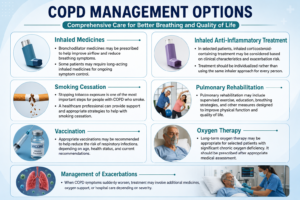
COPD Treatment in Indore: Available Treatment Options
Treatment for COPD is individualized according to symptoms, exacerbation history, lung function, comorbidities, and other factors. Current GOLD guidance includes both pharmacological and non-pharmacological management approaches.
Treatment may include:
Inhaled Medicines
Bronchodilator medicines may be prescribed to help improve airflow and reduce breathing symptoms.
Some patients may require long-acting inhaled medicines for ongoing symptom control.
Inhaled Anti-Inflammatory Treatment
In selected patients, inhaled corticosteroid-containing treatment may be considered based on clinical characteristics and exacerbation risk.
Treatment should be individualized rather than using the same inhaler approach for every person.
Smoking Cessation
Stopping tobacco exposure is one of the most important steps for people with COPD who smoke.
A healthcare professional can provide support and appropriate strategies to help with smoking cessation.
Pulmonary Rehabilitation
Pulmonary rehabilitation may include supervised exercise, education, breathing strategies, and other measures designed to improve physical function and quality of life.
Vaccination
Appropriate vaccinations may be recommended to help reduce the risk of respiratory infections, depending on age, health status, and current recommendations.
Oxygen Therapy
Long-term oxygen therapy may be appropriate for selected patients with significant chronic oxygen deficiency. It should be prescribed after appropriate medical assessment.
Management of Exacerbations
When COPD symptoms suddenly worsen, treatment may involve additional medicines, oxygen support, or hospital care depending on severity.
Can COPD Be Cured?
COPD is a chronic condition, and existing structural lung damage may not be completely reversed. However, COPD is treatable and its symptoms and progression can often be managed.
Appropriate treatment may help:
- Reduce symptoms
- Improve exercise tolerance
- Reduce exacerbation risk
- Improve quality of life
- Support daily activities
- Address contributing risk factors
Early diagnosis and individualized management are important components of long-term COPD care. GOLD describes COPD as both preventable and treatable and recommends management aimed at reducing symptoms and future health risks.
How Can COPD Progression Be Reduced?
Several measures can help support long-term respiratory health.
Doctors may recommend:
- Stop smoking and avoid tobacco exposure.
- Reduce exposure to dust, smoke, and chemical fumes.
- Avoid areas with heavy air pollution when possible.
- Take prescribed inhalers correctly.
- Attend regular follow-up appointments.
- Maintain appropriate physical activity.
- Consider pulmonary rehabilitation when recommended.
- Follow recommended vaccination schedules.
- Maintain adequate nutrition and hydration when medically appropriate.
- Learn how to recognize worsening COPD symptoms.
- Seek medical attention early during significant exacerbations.
Inhaler technique is particularly important because incorrect use may reduce the amount of medicine reaching the lungs.
COPD and Daily Physical Activity
Breathlessness may cause some people with COPD to reduce physical activity. Over time, becoming less active can contribute to reduced physical fitness and make everyday activities more difficult.
Depending on the patient’s condition, a doctor may recommend:
- Walking
- Breathing exercises
- Supervised exercise
- Pulmonary rehabilitation
- Strengthening exercises
- Activity pacing
Exercise plans should be individualized, particularly for people with significant breathlessness or advanced COPD.
Why Choose Dr. S. Z. Jafrey as a Pulmonologist in Indore?
Dr. S. Z. Jafrey is an experienced Pulmonologist in Indore with more than 30 years of expertise in respiratory medicine. He specializes in the diagnosis and management of COPD, asthma, allergies, lung infections, sleep-related breathing disorders, and other respiratory conditions.
His qualifications include:
- Advanced Allergy Training – University Klinikum Münster, Germany
- Advanced Bronchoscopy Training – American College of Chest Physicians (ACCP), USA
- Proficiency Certificate – Maryland University, USA
His experience in respiratory medicine helps in evaluating persistent cough, mucus production, wheezing, breathlessness, recurrent respiratory infections, smoking-related respiratory problems, and other symptoms that may require detailed pulmonary assessment.
Frequently Asked Questions About COPD Treatment in Indore
1. What are the early symptoms of COPD?
Early COPD symptoms may include persistent cough, mucus production, breathlessness during physical activity, wheezing, chest tightness, and reduced exercise tolerance.
2. Can a non-smoker develop COPD?
Yes. Although tobacco smoke is a major risk factor, COPD can also occur in people exposed to biomass smoke, air pollution, occupational dust, chemical fumes, or certain genetic and developmental factors.
3. Is spirometry necessary to diagnose COPD?
Spirometry is an important test for confirming airflow obstruction in the appropriate clinical setting. Current GOLD/GLI guidance emphasizes its role in confirming COPD diagnosis.
4. Can COPD be treated?
Yes. COPD is treatable. Management may include inhaled medicines, smoking cessation, pulmonary rehabilitation, vaccination, physical activity, risk-factor reduction, and other treatments based on individual needs.
5. Can COPD symptoms get worse suddenly?
Yes. COPD exacerbations can cause a sudden increase in cough, mucus production, wheezing, or breathlessness. Significant worsening may require prompt medical treatment.
6. Does smoking cessation help after COPD develops?
Yes. Stopping smoking removes an important ongoing source of lung irritation and is an important component of COPD management.
7. When should I see a Pulmonologist in Indore for COPD symptoms?
Consider seeing a pulmonologist if you have persistent cough, mucus production, recurrent wheezing, breathlessness, reduced exercise tolerance, repeated respiratory infections, or a significant history of smoking or occupational exposure.
8. Can air pollution worsen COPD?
Yes. Air pollution can irritate the airways and may worsen coughing, wheezing, mucus production, and breathlessness in people with COPD.
9. Why choose Dr. S. Z. Jafrey for COPD Treatment in Indore?
Dr. S. Z. Jafrey has more than 30 years of experience in respiratory medicine and specializes in diagnosing and managing COPD, asthma, allergies, lung infections, and other respiratory disorders.
Conclusion – COPD Treatment in Indore
COPD is a chronic respiratory condition that can cause persistent cough, mucus production, wheezing, breathlessness, chest tightness, and reduced exercise tolerance. Early symptoms can sometimes be overlooked, particularly when they develop gradually or are attributed to smoking, aging, or poor fitness.
Recognizing early symptoms and obtaining appropriate evaluation can help identify COPD and other conditions that may produce similar respiratory complaints. Spirometry plays an important role in confirming COPD, while treatment is individualized according to symptoms, exacerbation risk, lung function, and other clinical factors.
Reducing tobacco and environmental exposure, using prescribed inhaled medicines correctly, maintaining physical activity, attending follow-up appointments, and managing respiratory infections can all be important parts of long-term COPD care.
Persistent cough, increasing breathlessness, recurrent wheezing, regular mucus production, or repeated chest infections should not be ignored. Consulting an experienced Pulmonologist in Indore can help with appropriate evaluation, diagnosis, and long-term respiratory management.
For people experiencing persistent or worsening COPD symptoms, COPD Treatment in Indore focuses on identifying the severity and characteristics of the condition and developing an appropriate management approach based on individual respiratory needs.